 Devpur
Hanuman as devotion in action
Hanuman is one of the clearest examples of bhakti expressed through action. His life does not present devotion as a private feeling only. It shows devotion as service, courage, loyalty, and readiness to act when dharma needs support. For many devotees, that is why Hanuman feels practical rather than distant.
He is remembered as Ram’s trusted messenger, as the one who crossed fear and distance to find Sita, and as the protector who appears in moments of difficulty. That makes Hanuman especially meaningful for people who want a spiritual path that also strengthens daily conduct.
What Hanuman represents
Hanuman is often worshipped for strength, but the strength is never just physical. It includes self-control, emotional steadiness, and the ability to keep serving even when circumstances are difficult. His devotion to Ram is the central image: complete trust, no ego, and no hesitation when duty is clear.
Other common names also carry meaning. Bajrangbali suggests power and resilience. Pavanputra points to purity, movement, and life-force. Maruti evokes swiftness and readiness. Together they show a deity who is not passive, but alert and active in support of the right cause.
Key stories that shape Hanuman devotion
The stories of Hanuman are useful because they teach behavior, not only mythology. Childhood stories show his extraordinary energy. The search for Sita shows courage and focus. The episode of bringing Sanjeevani shows service under pressure. Even his moments of humility remind devotees that power is best when it is disciplined.
When people read Hanuman stories along with the Chalisa or Aarti, the verses become easier to feel. The stories explain why devotion to Hanuman is so often linked with problem-solving, fear reduction, and mental clarity.
How to practice Hanuman bhakti at home
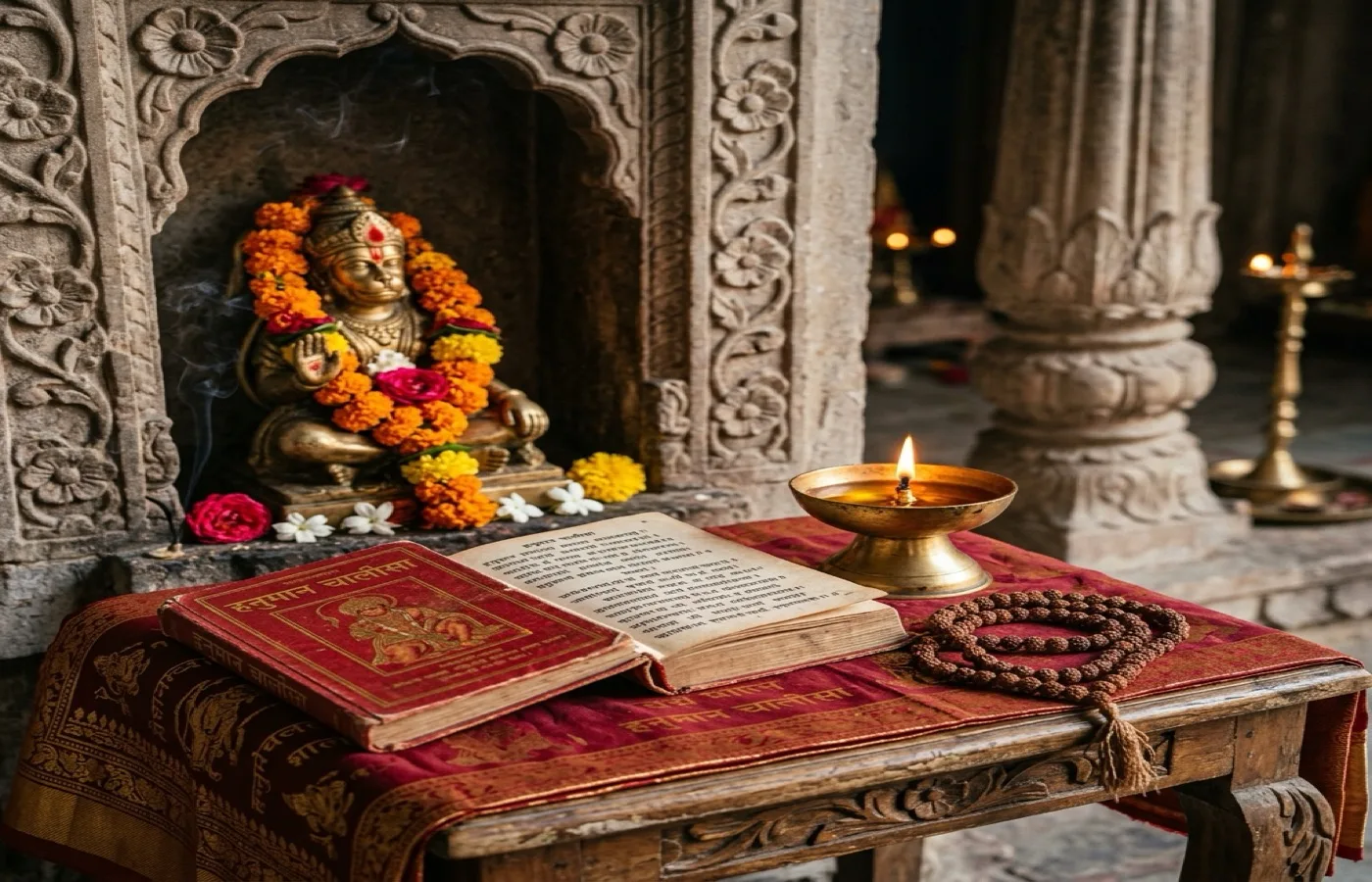
A practical Hanuman routine does not need to be heavy. A clean spot, one small lamp, and consistent attention are enough.
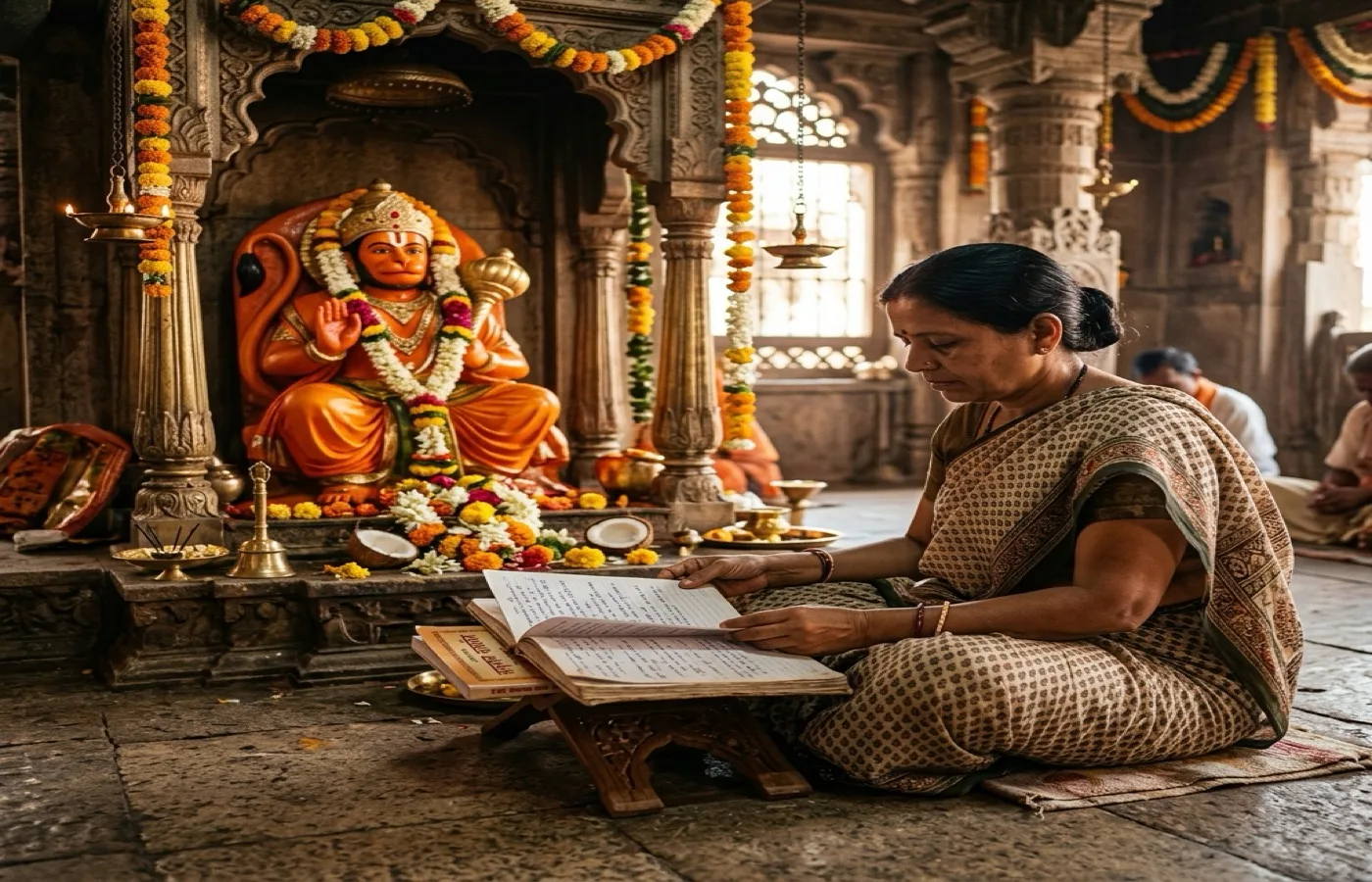
- Sit before the image of Hanuman with a clear intention.
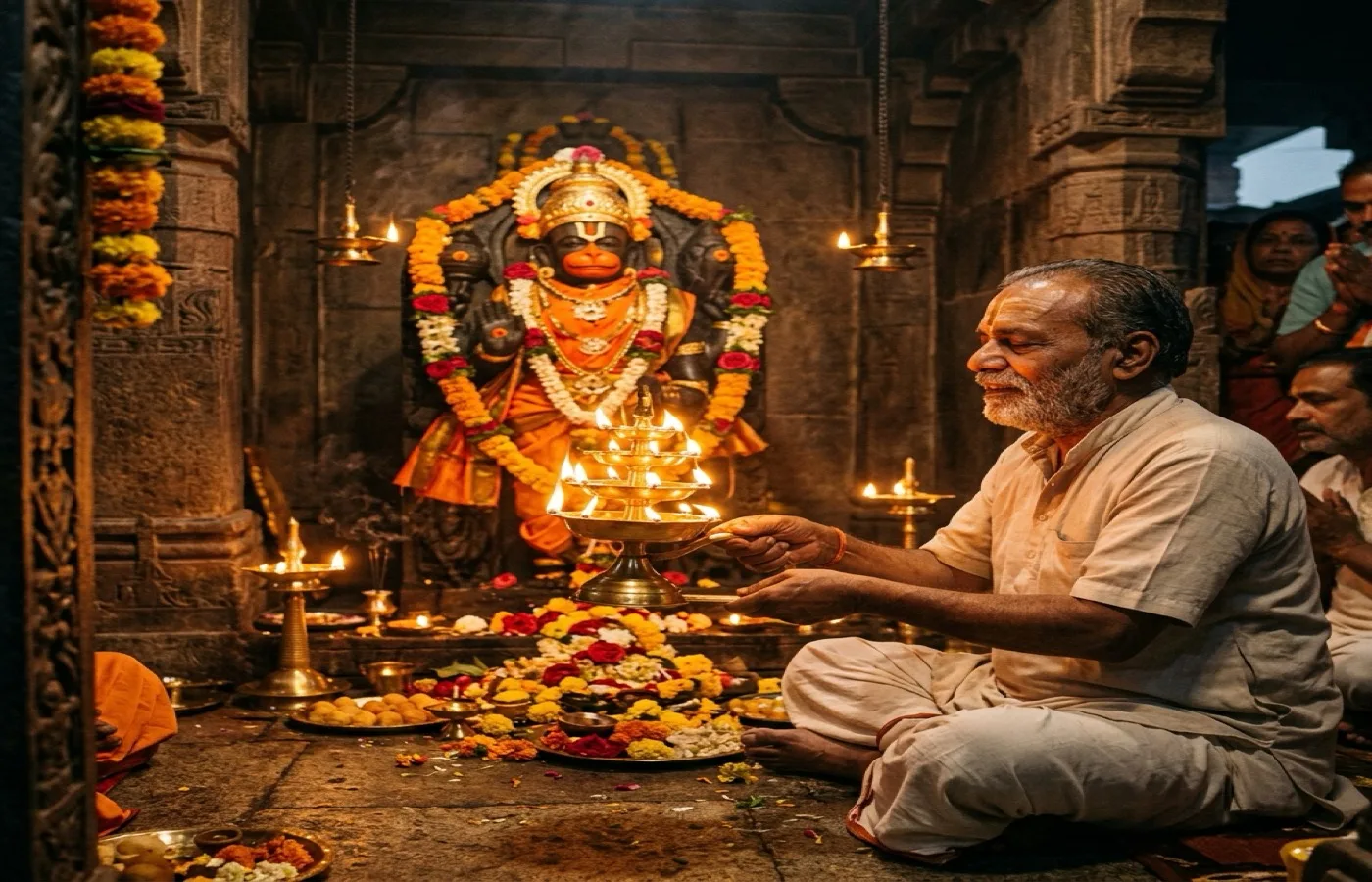
- Light a diya and offer a short prayer for courage or protection.
- Read Hanuman Chalisa or chant Hanuman Beej Mantra.
- On chosen days, add Hanuman Aarti.
- Close with a silent moment and one action you will take in the day.
That last step matters. Hanuman devotion becomes powerful when it leads to action, not just emotion.
Why this hub page matters
This hub page is not meant to replace the Chalisa, Aarti, or mantra pages. It helps a reader understand how those pages fit together. If you arrive here because you want courage, discipline, or protection, this page can guide you to the most useful next step instead of leaving you with a loose collection of links.
For a beginner, the likely path is simple: read the deity page first, choose one repeated practice, and then explore the related devotional pages. For a more experienced devotee, the hub works as a reminder of the full Hanuman path: story, mantra, aarti, and disciplined service.
How families can use this page
Families often use Hanuman devotion as a shared practice because the deity’s symbolism is easy to explain across generations. Children understand the idea of courage and help. Adults understand the importance of restraint and loyalty. Elder family members often appreciate the stability that Hanuman prayer brings into the household.
This makes the page especially helpful for households that want one clear devotional anchor. A weekly family reading of a story, followed by a short mantra or aarti, is enough to build continuity.
Common mistakes to avoid
One common mistake is reducing Hanuman to only “power”. That misses the larger teaching, which is power under discipline. Another mistake is making the practice urgent only during stressful times and then forgetting it when life feels normal. Hanuman bhakti works best when it is steady, not only reactive.
It also helps to avoid treating worship as a performance. Hanuman devotion is better measured by courage, consistency, humility, and service than by ritual complexity.
What to remember on difficult days
On difficult days, Hanuman is a practical reminder that fear does not have to control action. Even a short prayer can change the tone of the day if it brings attention back to duty and service. For many devotees, that is the real value of Hanuman: not escape from life, but steadiness within it.
If you are tired, confused, or emotionally scattered, keep the practice very small. Read one verse, light one diya, or silently remember Hanuman’s name for a minute. The goal is not pressure. The goal is restored direction.
Final takeaway
Lord Hanuman stands for a rare combination: strength with humility, speed with discipline, and loyalty with wisdom. That is why his worship remains so useful in everyday life. If you use this page well, it should not just inform you about Hanuman. It should help you begin a stable devotional pattern that feels practical, repeatable, and spiritually grounded.
His path is especially useful when life feels busy because it turns devotion into a simple daily habit instead of a complicated ritual.