 Devpur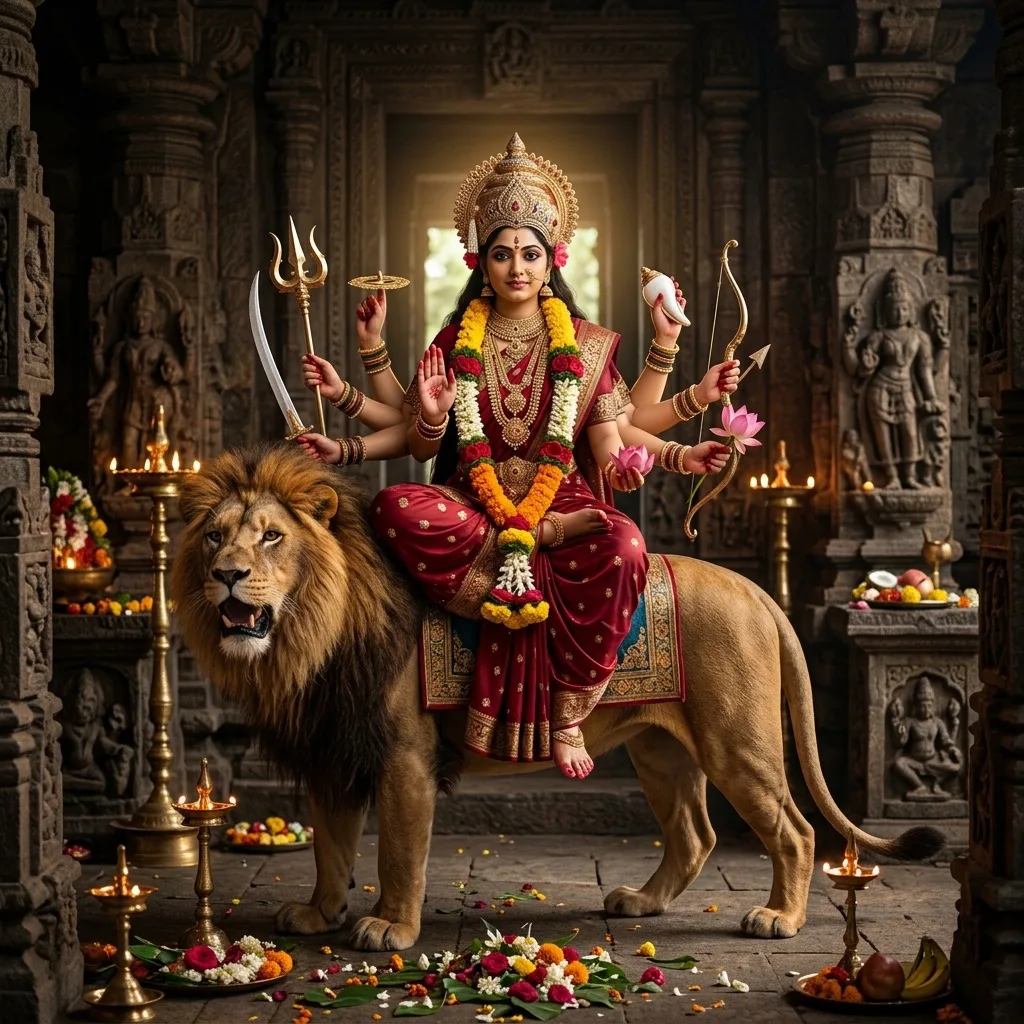
Goddess Durga as protective Shakti
Goddess Durga is one of the most important divine forms in Hindu devotion because she brings together power, compassion, and protection. Devotees do not approach her only as a symbol of strength. They approach her as a motherly presence who removes fear, supports courage, and keeps dharma steady when life becomes uncertain.
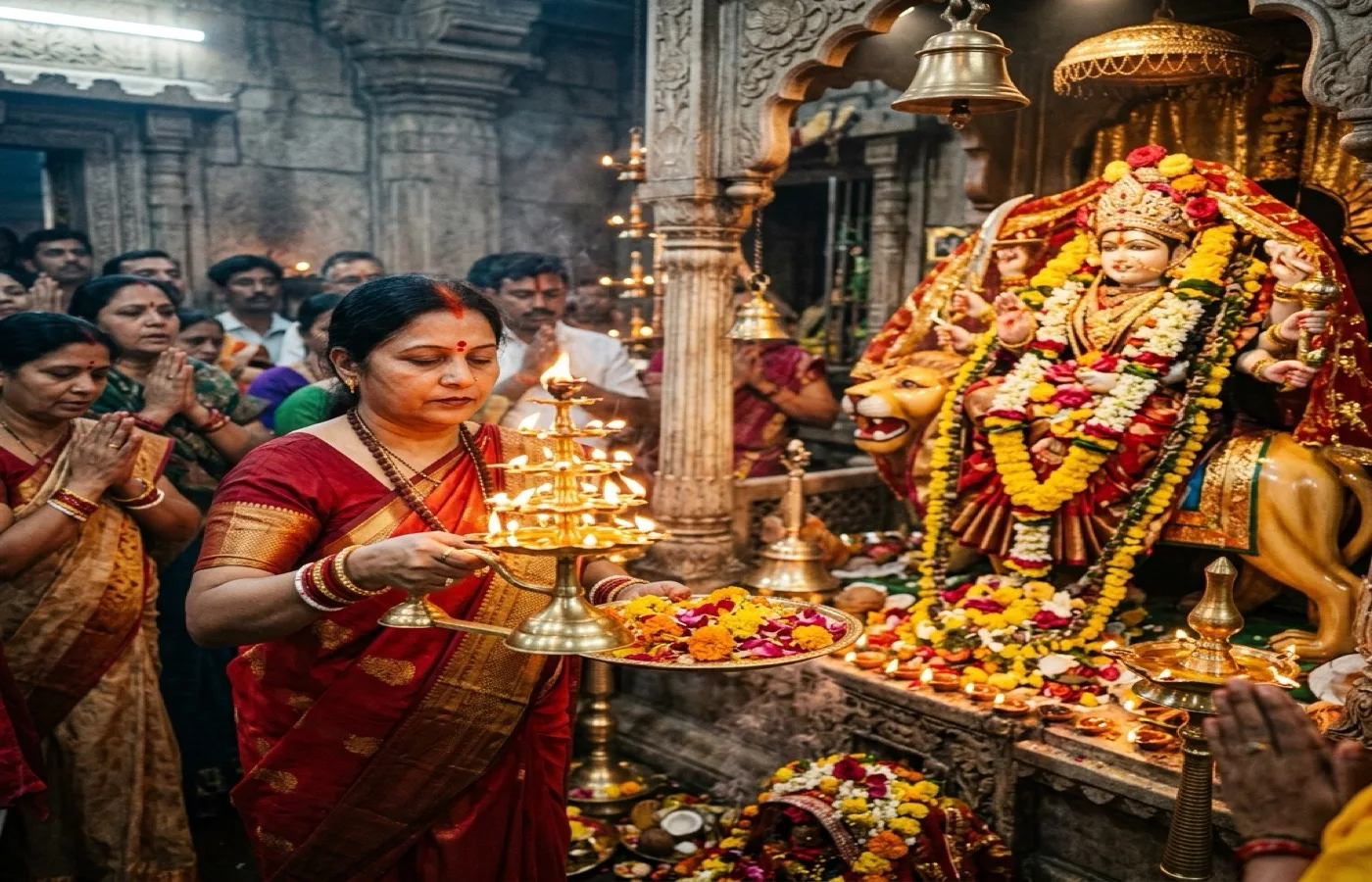
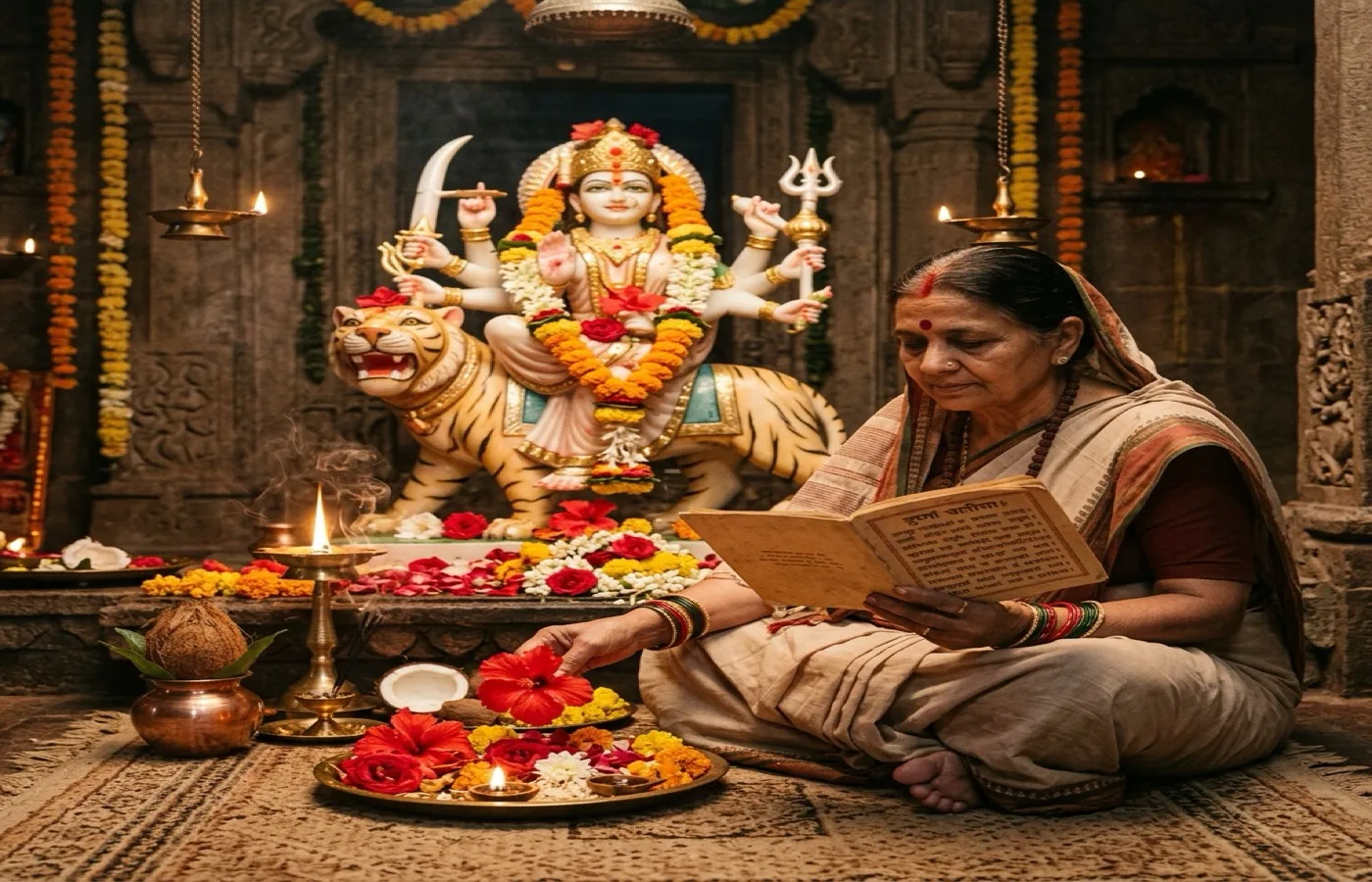
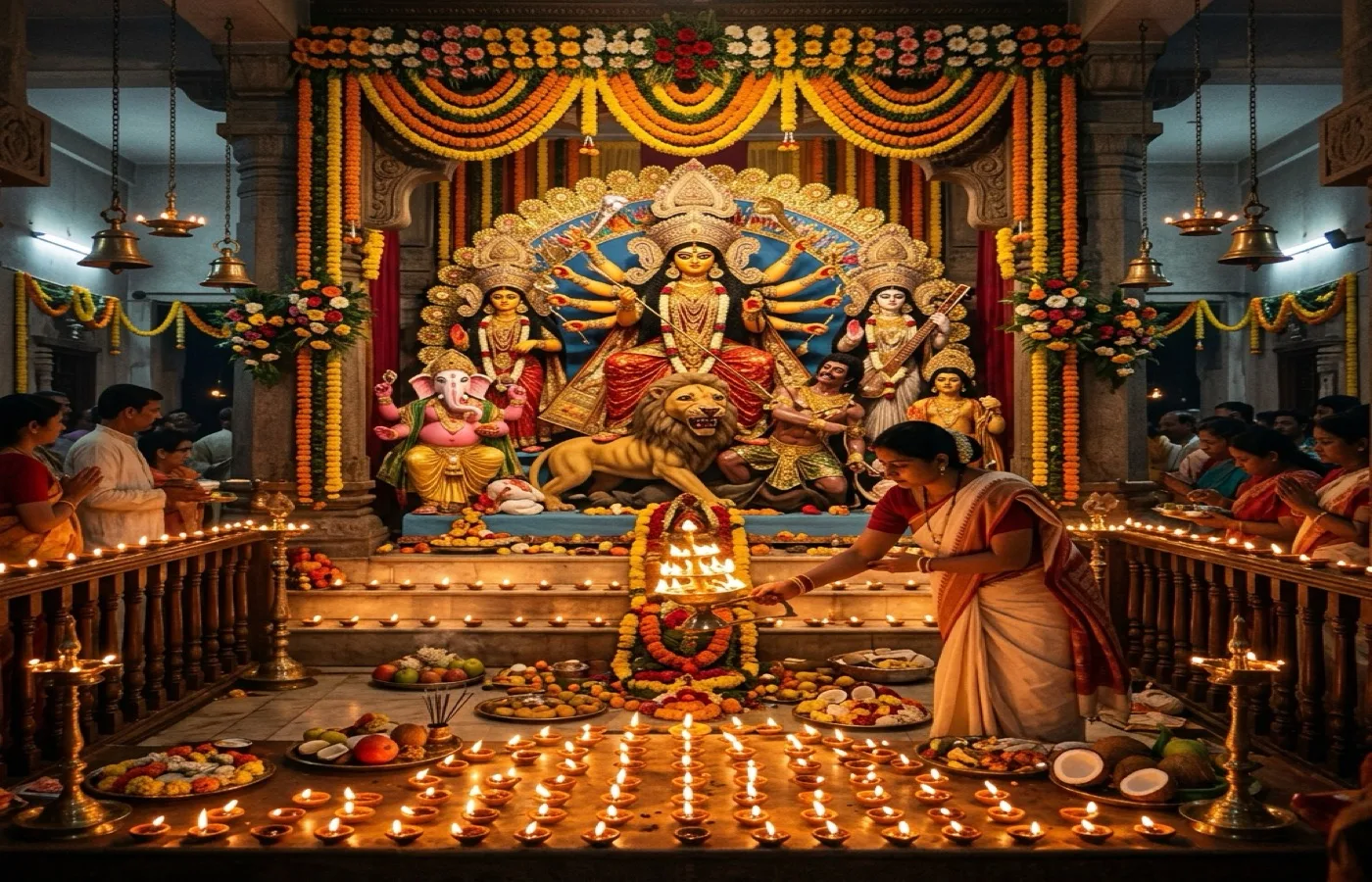
Her most familiar image is the lion-riding form with weapons, ornaments, and a calm but firm expression. That image is not meant to suggest aggression for its own sake. It shows that sacred strength can be disciplined, beautiful, and caring at the same time. For many families, Durga is the form of the Divine that feels closest during trouble, exam pressure, illness, or major transitions.
What her symbols teach
Every part of Durga’s imagery has meaning.
- The lion points to fearless action.
- The weapons point to the power to cut through ignorance, pride, and harmful habits.
- The serene face points to inner balance rather than emotional chaos.
- The maternal form points to care, shelter, and blessing.
- The names Mahishasura Mardini, Jagadamba, and Adi Shakti remind devotees that she is both world-mother and force against adharma.
This symbolism is why Durga can feel especially relevant in real life. Her form says that courage is not cold, and tenderness is not weak.
Durga in daily worship
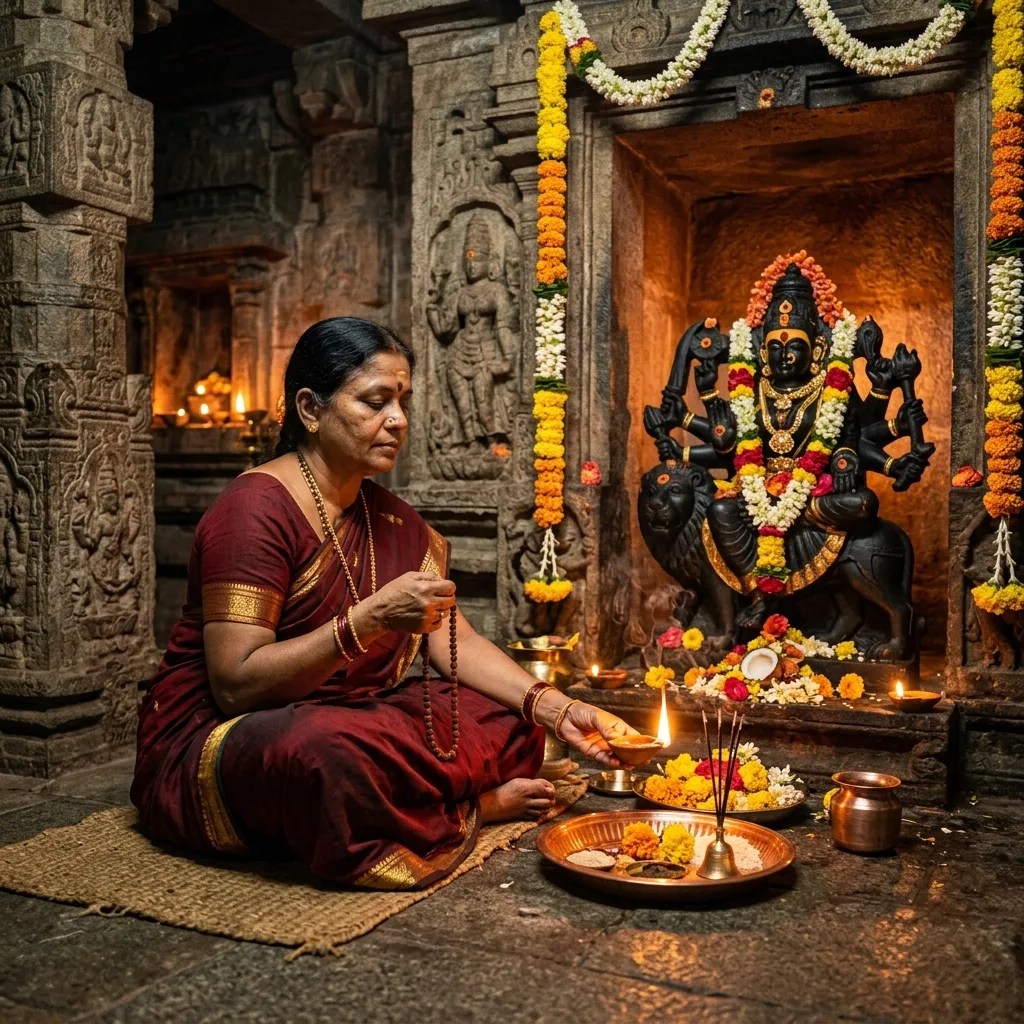
Many people first meet Durga through Navratri, but her presence is not limited to a festival. She can be part of a daily household rhythm through mantra, aarti, chalisa, or a few moments of silent prayer. The important thing is consistency. A short practice done regularly is often more valuable than a long practice done only once in a while.
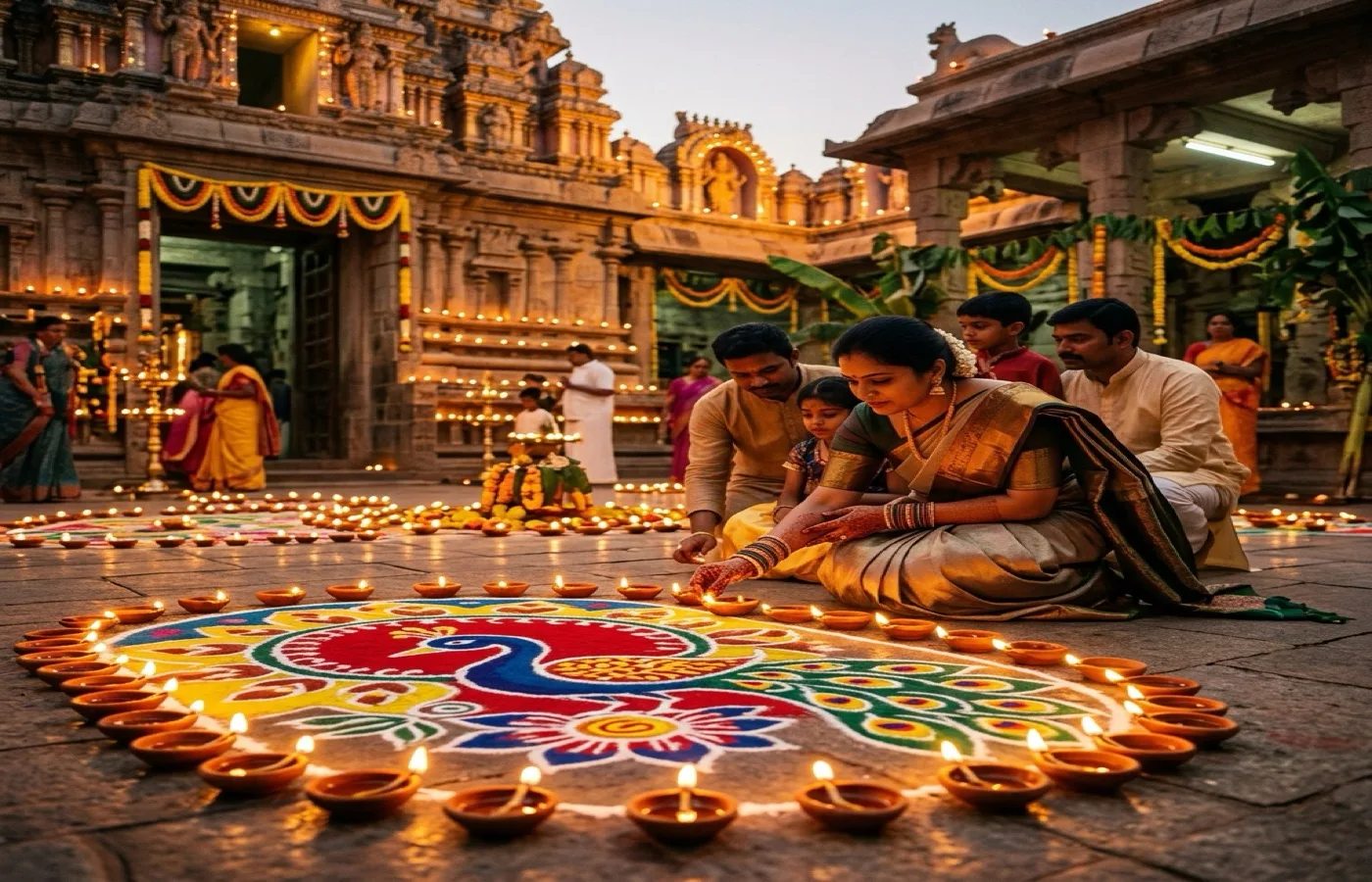
For a simple home routine, devotees often begin with a clean altar, a lit diya, a short mantra, and then aarti or a few lines of the Chalisa. That sequence helps the mind settle. It also keeps worship accessible for working families, students, and beginners who do not have time for long rituals every day.
Why Navratri matters so much
Navratri is the most recognizable Durga-centered festival because it creates a dedicated devotional frame around her worship. The nine nights are commonly used for prayer, fasting, self-discipline, and focused remembrance of the Goddess’s forms. For many devotees, Navratri is not just a calendar event. It is a reset point for spiritual habits.
During those days, people often increase:
- mantra repetition,
- reading of Durga Aarti or Chalisa,
- family prayer time,
- sattvic discipline,
- quiet reflection in the evening.
This is where Durga becomes especially practical. The festival makes the spiritual path visible and repeatable.
How this hub page helps
This page is meant to be the entry point for readers who want to understand Durga before moving into more specific worship pages. If you are trying to learn who she is, what she represents, and how her devotion fits into daily life, this page gives you the overview.
The most useful next steps are:
- Durga Aarti for daily song and light offering.
- Durga Chalisa for longer recitation and praise.
- Durga Mantra for short, repeatable japa practice.
- Navratri for festival context and disciplined worship.
Those pages turn meaning into practice. Without that follow-up, a deity page can become only a summary. With it, the page becomes a real devotional map.
Family and beginner use
Durga worship is often strongest in families because it can be shared simply. One person can light the lamp, another can recite, and another can explain a verse or symbol to children. That makes devotion participatory instead of intimidating.
Beginners do not need to learn everything at once. A good starting point is:
- Learn her main meaning as protective Shakti.
- Understand the lion and weapon symbolism.
- Keep one fixed prayer time each week or each day.
That is enough to build familiarity. Over time, a beginner can add Navratri practices, more verses, and deeper study.
Durga and the larger Devi path
Durga is often the first form people study when they begin learning the Devi tradition, but she is also a gateway into a wider devotional landscape. Her strength points to protection, her maternal presence points to shelter, and her role in Navratri points to discipline. That combination makes her useful not only for festival worship but also for long-term spiritual habits.
If a reader starts with Durga and then moves to mantra, aarti, and chalisa, the path becomes easier to sustain. The pages around her are not random additions. They are the practical expressions of the same devotional center.
How to use this page well
If you are new to Durga, read this page once for orientation and then return after trying one related practice page. For example, read the aarti if you want a daily song, the mantra if you want a short japa form, or the chalisa if you want a longer recitation. If you are preparing for Navratri, use this hub first and then plan your daily routine around it.
That order helps because devotion becomes easier to continue when it is broken into clear, repeatable steps. A strong hub page should not just explain a deity. It should reduce confusion and show the next move.
A practical takeaway
Durga is not only a goddess to be remembered in crisis. She is also a daily reminder that spiritual strength should be steady, compassionate, and disciplined. If you approach her through a short mantra, aarti, chalisa, or quiet meditation, the goal is the same: to build courage without losing gentleness.
This is why Durga remains so central in Hindu devotion. She gives devotees a way to face difficulty with dignity and to turn fear into prayer.