2025
September 22, 2025
 Devpur
 Festival linked to Goddess Durga
Navratri is a nine-night festival honoring Goddess Durga through prayer, fasting, discipline, home puja, and community celebration.
Reviewed by Devpur Editorial Team on 31 March 2026
2025
September 22, 2025
2026
October 11, 2026
Duration
9 day(s)
Navratri is the nine-night span when devotees focus on Goddess Durga and her forms through prayer, fasting, chanting, and self-discipline. The festival is not only celebratory; it is also a reset for habits, speech, food, and attention.
Many families follow a simple daily rhythm. The first part is cleaning the worship space and lighting a diya. The second part is prayer or mantra recitation. The third part is a small act of discipline such as sattvic food, silence for a few minutes, or reduced screen time. The nine nights work because repetition builds steadiness.
Some traditions connect the days with different forms of Durga and different qualities to cultivate. The exact emphasis varies by region, but the shared idea is the same: progress through devotion, not pressure.
Fasting during Navratri is meaningful, but it should be sustainable. Some devotees observe a full fast, some take one meal, and some follow a simple sattvic diet. Health, age, work schedule, and family needs matter. The goal is not punishment. The goal is controlled, mindful living.
A useful Navratri fast removes excess rather than creating distress. Keep water intake sensible, avoid unnecessary strain, and choose a rhythm you can continue for the whole period. Discipline that breaks the body does not help the mind.
A simple home puja can be enough. Clean the place of worship, place a Durga image or kalash, light a diya, offer flowers, and recite a short prayer or a Durga mantra. If your family uses a daily aarti, keep it brief and sincere. What matters most is regularity.
Many homes also keep a small note with one daily intention. For example: speak gently, eat simply, or give some time to prayer. That small intention turns Navratri into lived practice.
Garba, dandiya, and local gatherings bring energy and cultural joy to Navratri. They are a beautiful part of the festival when they stay connected to devotion. The healthiest balance is simple: celebrate with joy, but let prayer remain central.
If you attend community events, keep space for rest, food discipline, and family time. A crowded schedule can make the festival feel busy but empty. A slower rhythm often preserves both joy and meaning.
Kanya pujan is one of the most recognizable Navratri practices. Families honor young girls as a way of respecting the feminine divine principle. It is best done with simplicity, dignity, and genuine gratitude rather than formality alone.
If you perform kanya pujan, make the gesture respectful and age-appropriate. Clean food, modest hospitality, and a quiet prayer are enough. The spirit is reverence, not display.
The strongest Navratri observance is not the most elaborate one. It is the one you can repeat sincerely. A family that keeps one diya, one prayer, one fast, and one daily intention may gain more than a family that tries to do everything and finishes exhausted.
Navratri also gives a natural pause before or after the season to reflect on habits. Did your prayer routine improve? Did you eat more mindfully? Did your speech become calmer? Those are real outcomes.
Navratri does not look exactly the same everywhere. Some regions focus more on temple darshan and Durga puja, while others lean toward home worship, fasting, and music. In some homes the emphasis is on Garba and community gathering, and in others it is on silence, mantra, and simple food.
This variety is a strength, not a contradiction. It shows that the same festival can support different household rhythms while preserving the same spiritual center.
The value of Navratri continues after the nine nights end. Many devotees keep one habit alive, such as a weekly fast, daily prayer, or a small discipline around food and speech. That is often the best sign that the festival had real effect.
If you want a practical follow-up, write down one habit you want to keep for the next month. That turns festival energy into daily life rather than leaving it behind as a memory.
The nine nights symbolically mark a period of steady inner refinement through Shakti worship, discipline, and repeated devotional practice.
No. Fasting is traditional and valuable, but it is not compulsory for everyone. A sustainable observance is better than a difficult one.
Yes. A small home altar, daily diya, prayer, and sattvic discipline can create a meaningful observance on their own.
Garba is the celebratory side of Navratri, while puja and fasting carry the devotional center. Many families do both in a balanced way.
Kanya pujan expresses reverence for the feminine divine and is usually done with respect, clean food, and simple hospitality.
Keep one practice alive: a daily prayer, a weekly fast, or a small discipline from the nine nights. That is how the festival leaves a lasting effect.
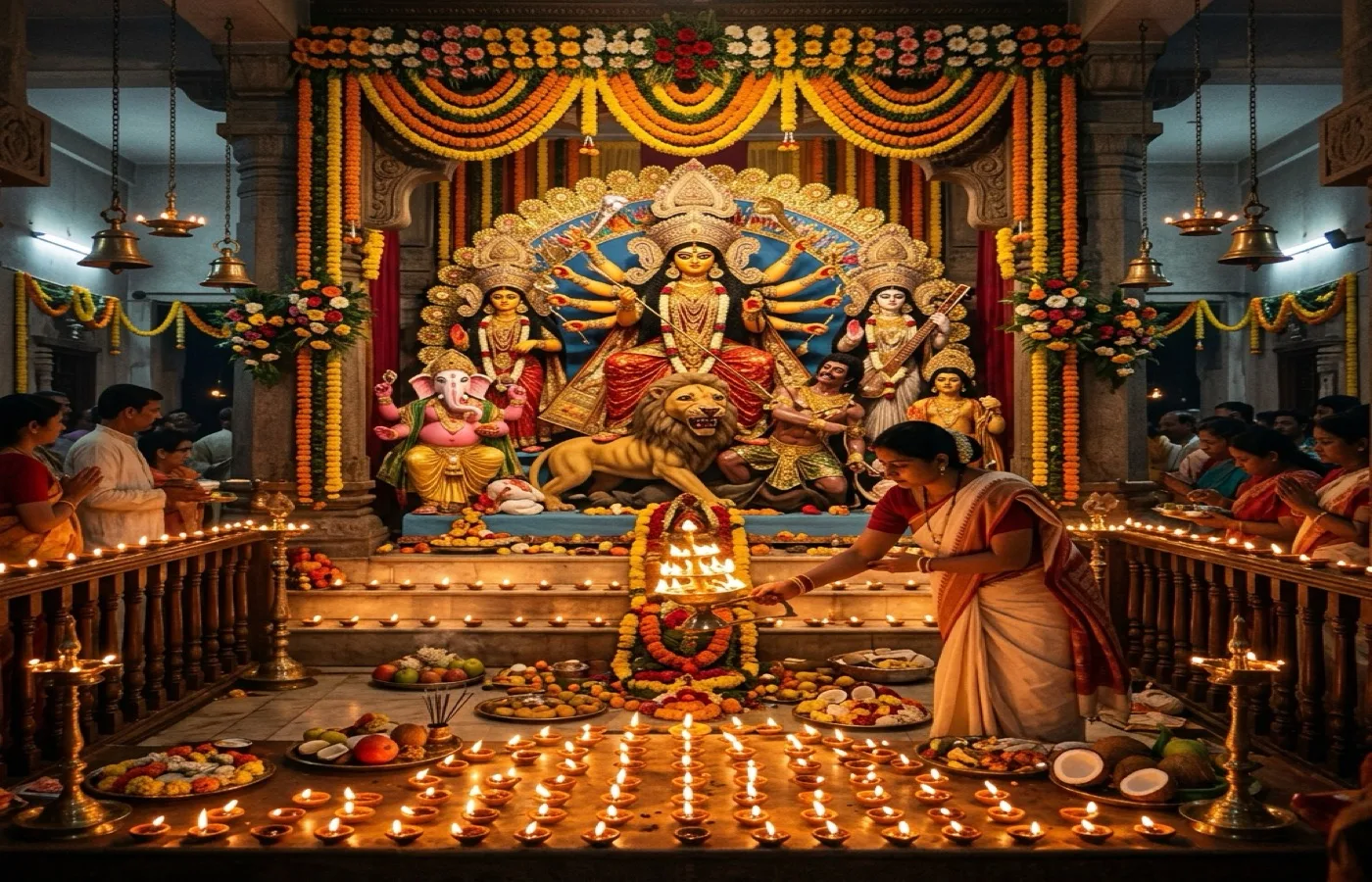
Goddess Durga represents protective Shakti, courage, and maternal grace, and this page connects her symbolism with daily worship and Navratri practice.
Lord Hanuman represents fearless devotion, disciplined service, and unwavering dedication to dharma in Hindu traditions.
Gayatri mantra is a foundational Vedic prayer for clarity, wisdom, and spiritual illumination in daily life.
This Shiva puja guide gives a clear beginner-friendly sequence for respectful daily or Monday worship at home.
Navratri is a period of Shakti worship that encourages courage, discipline, purity, and steady devotion through nine nights of practice.
No. Fasting is traditional and meaningful for many families, but health and sustainability matter more than rigid observance.
Yes. A clean corner, diya, Durga prayer, simple sattvic food, and a short daily routine can make home observance deeply meaningful.
Kanya pujan is the respectful worship and feeding of young girls, usually done as a way of honoring the feminine divine principle.
Garba and community celebration can be part of Navratri, but many devotees keep the devotional center through puja, fasting, and reflection.