 Devpur
Who Shiva is
Lord Shiva is one of the central deities in Hindu tradition. Devotees honor him as the force that dissolves what is no longer needed so new growth can begin. That makes Shiva especially important in moments of change, grief, discipline, and inner awakening.
Main forms and symbols
Shiva is worshipped in many forms. As Nataraja, he represents cosmic rhythm and movement. As Dakshinamurti, he is the silent teacher. As Ardhanarishvara, he shows the inseparable balance of masculine and feminine energies. The Neelkanth form reminds devotees of his compassion and self-sacrifice.
His most familiar symbols are equally practical for devotion. The trishul points to the power to cut through ignorance. The damru suggests the rhythm of creation. The third eye stands for awareness beyond appearances. Nandi represents loyalty, steadiness, and patient devotion.
For many readers, Shiva becomes easier to understand when symbols are treated as teaching tools rather than decoration. Ash on the body points to impermanence. The crescent moon suggests control over time and emotion. The Ganga flowing from his locks represents purification held within discipline. Together, these symbols explain why Shiva is loved by ascetics, householders, and seekers who want both strength and simplicity.
A simple daily Shiva practice
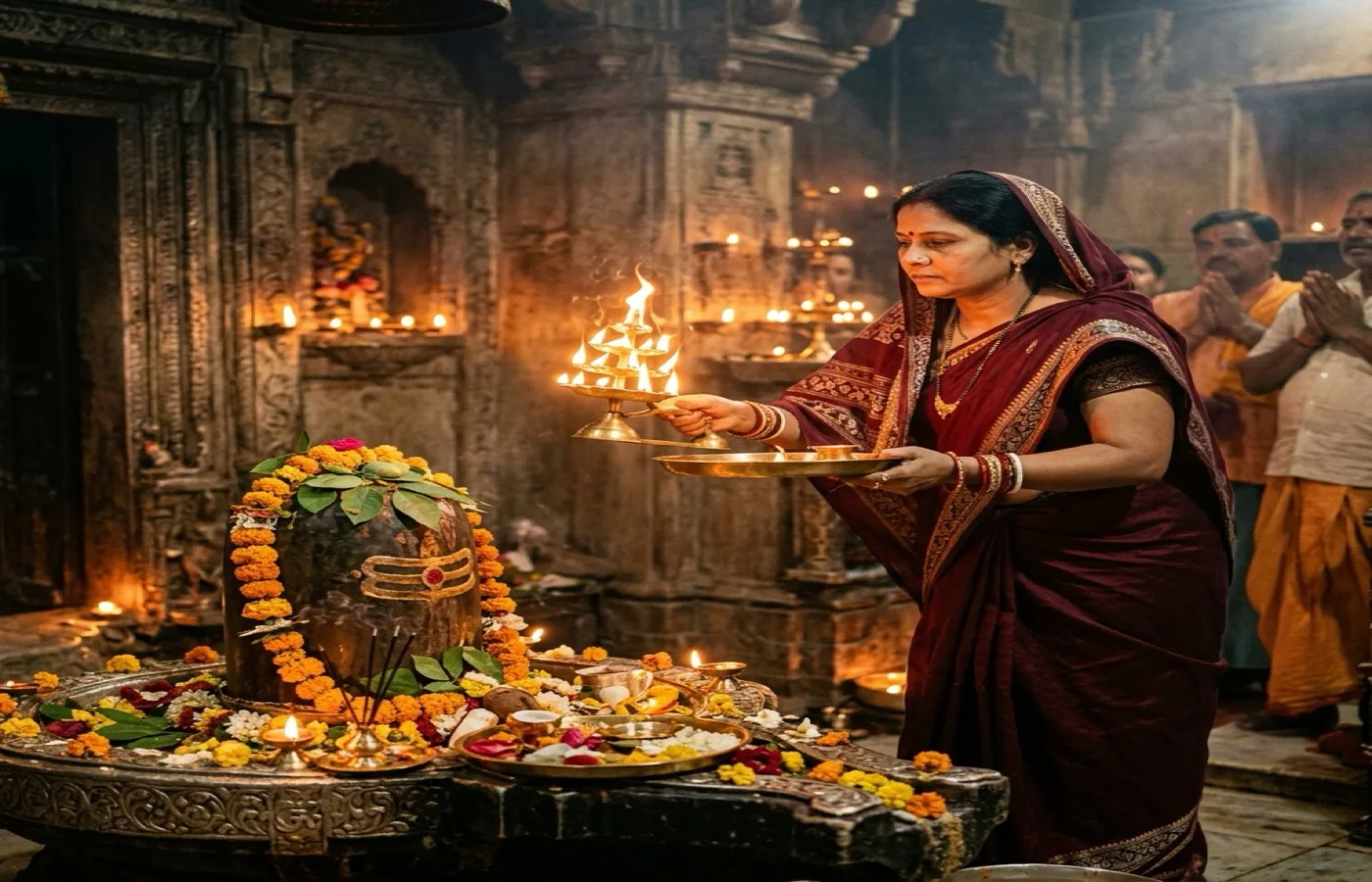
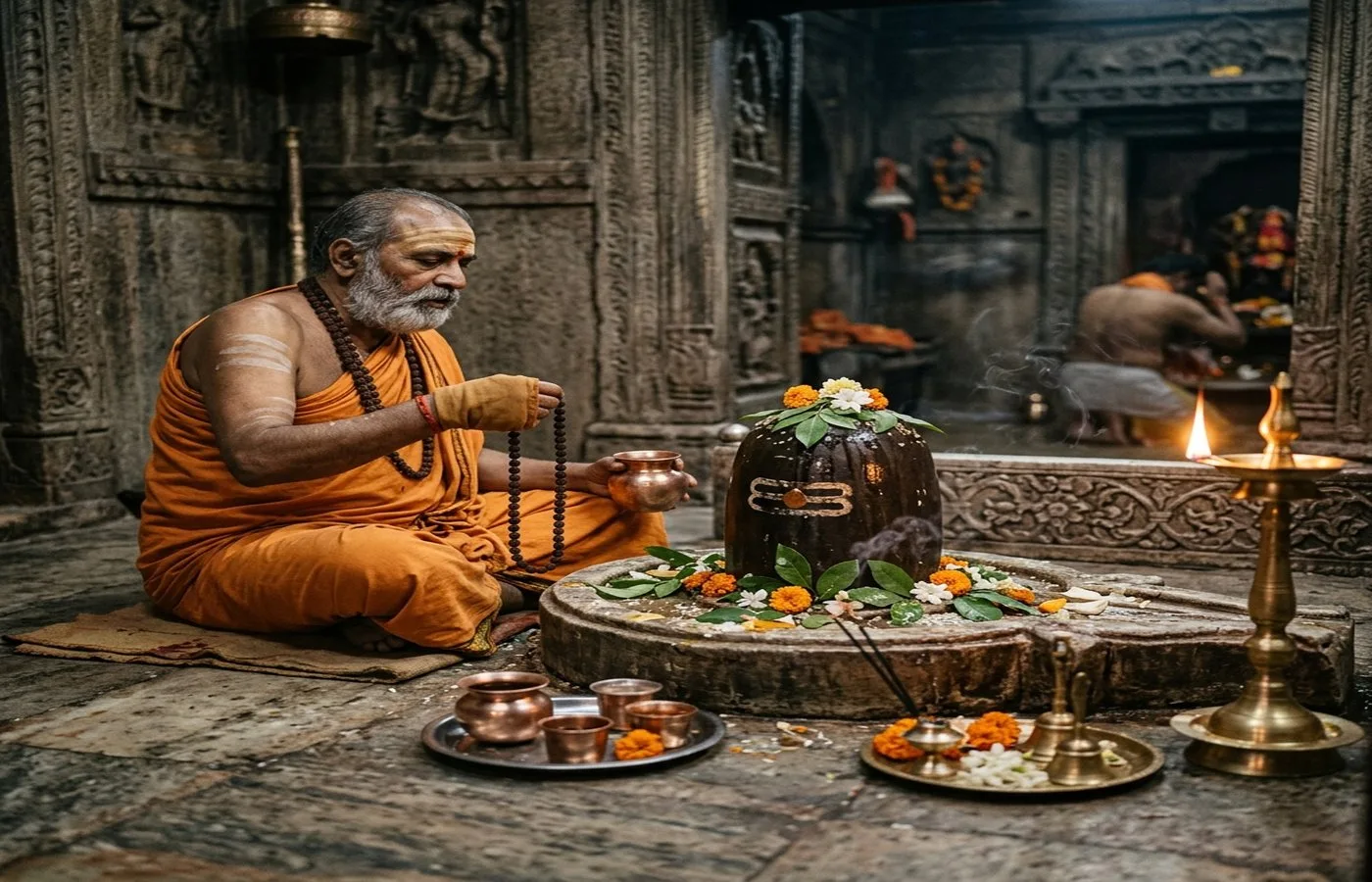
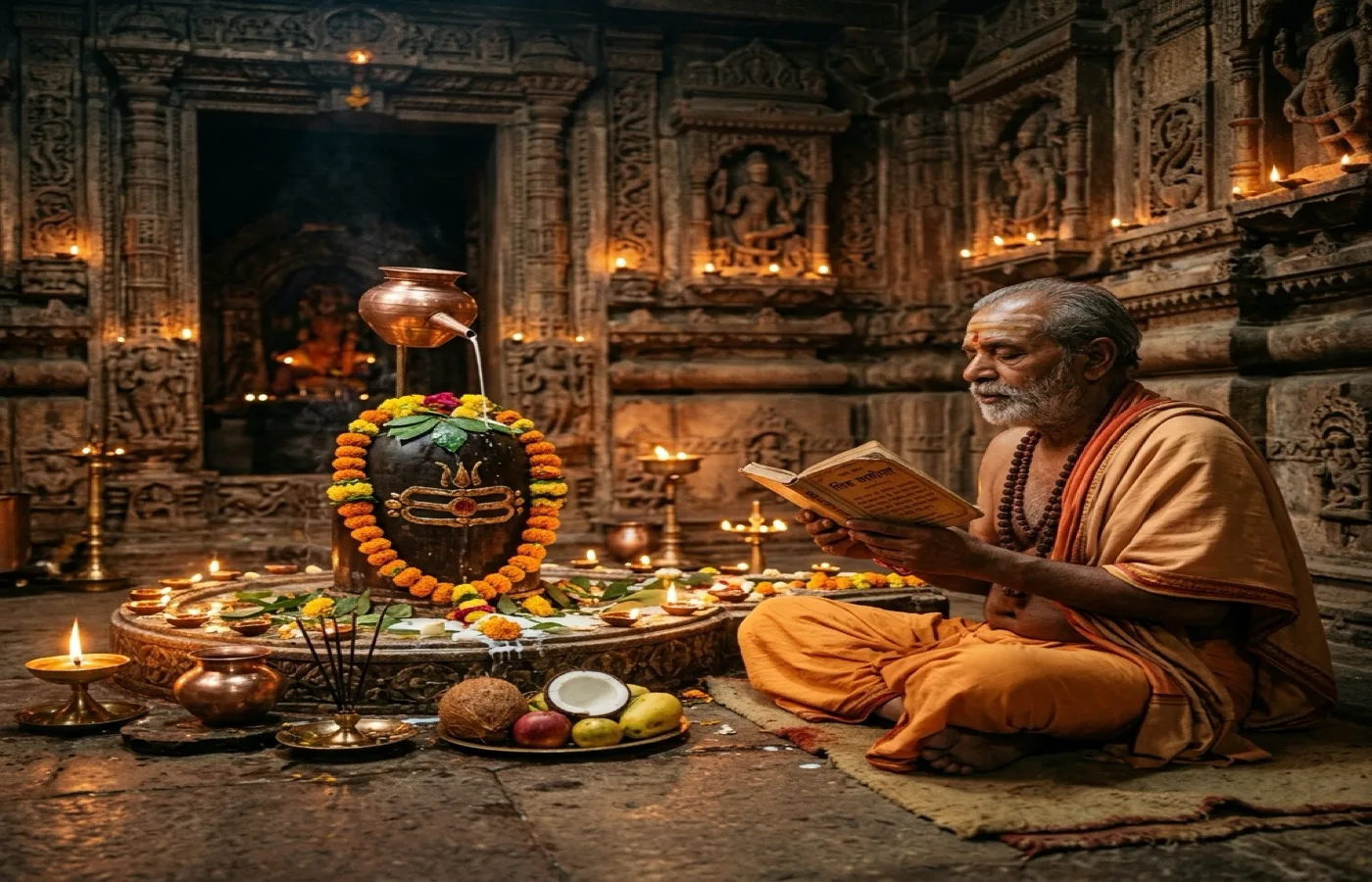
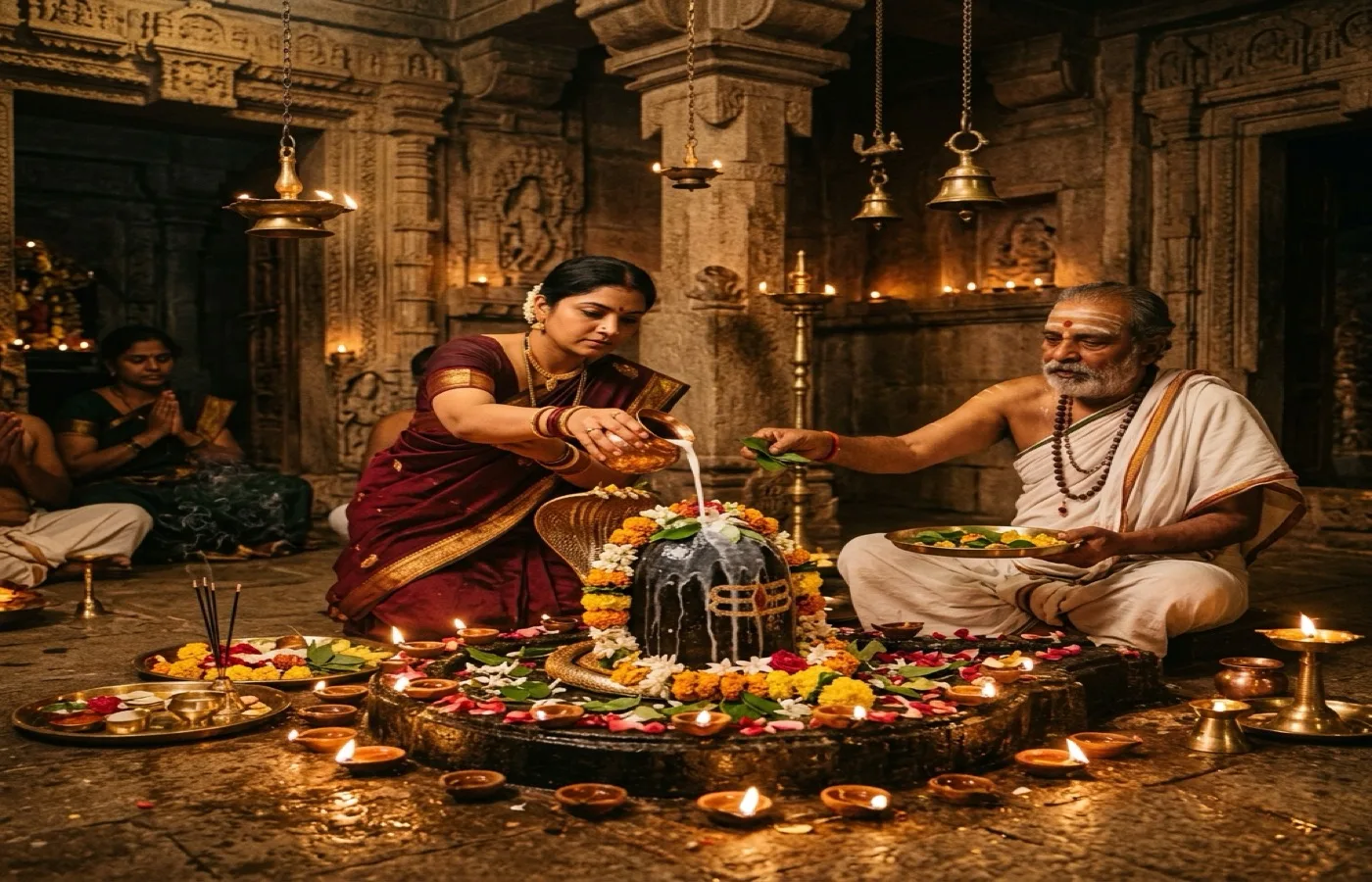
A Shiva routine does not need to be elaborate. Many devotees begin with a clean space, a diya, water for abhishek, and a few bilva leaves. Chanting Om Namah Shivaya slowly and attentively is often enough for a meaningful daily practice.
If you keep a Monday vrat, visit a temple, or offer prayer at home, the most important element is sincerity. For Shiva worship, consistency and calm attention matter more than display.
Beginners often do well with a short sequence:
- Clean the prayer space and light a diya.
- Offer water, flowers, or bilva leaves.
- Chant Om Namah Shivaya or the Mahamrityunjaya Mantra.
- Read a short Shiva aarti or one section of the Shiva Chalisa.
- Sit quietly for a minute before returning to daily work.
This pattern keeps the practice realistic. It also turns the page into a bridge between understanding Shiva and actually beginning worship at home.
Stories that shape Shiva devotion
The Neelkanth story shows Shiva drinking poison to protect the world, which is why he is remembered as both powerful and deeply compassionate. The descent of the Ganga explains why he is linked with sacred rivers and purification. The Daksha story highlights the tension between pride and reverence. The Ganesha and Kartikeya traditions show Shiva as a father who guides, corrects, and protects.
These stories are not just mythology for reading once. They give devotees practical language for patience, restraint, service, and courage.
They also explain why Shiva devotion often feels emotionally direct. Readers are not only learning abstract doctrine. They are meeting a deity who enters crisis, absorbs pain, and stays still in the middle of chaos. That is part of why so many devotees turn to Shiva during fear, grief, confusion, or major transition.
When people turn to Shiva
Devotees often turn to Shiva on Mondays, during Mahashivratri, or when they want steadiness during uncertainty. He is also remembered in grief, during major life transitions, and when a person wants to simplify life and return to essentials.
This hub connects to aarti, mantras, chalisa, temples, festivals, and stories so readers can move from meaning to practice without losing the thread.
Why Shiva matters to household devotees
Shiva is often associated with ascetics and mountain solitude, but he is also deeply meaningful for household life. He is husband, father, teacher, and protector. That gives families a way to approach him not only as a distant cosmic force but as a deity who understands responsibility, sacrifice, and the effort of keeping inner balance while living in the world.
For that reason, Shiva worship is often simple and sustainable. A household may not perform elaborate ritual every day, but a lamp, a short mantra, and a weekly Monday prayer can still create a living devotional rhythm. In SEO terms this matters because readers landing on a Shiva hub are often not asking for philosophy alone. They want to know how Shiva fits into actual daily life.
Monday worship and Mahashivratri
Monday is traditionally linked with Shiva, so many devotees choose that day for temple visits, vrat, abhishek, or extra mantra japa. The day works well for beginners because it offers a repeatable weekly anchor instead of an unrealistic promise of long daily ritual.
Mahashivratri is the most important festival in the Shiva calendar. Devotees stay awake in prayer, chant his names, offer milk or water to the linga, and reflect on restraint, purification, and grace. A strong Shiva hub should mention this clearly because many users arrive looking for a relationship between daily practice and festival observance.
Temples, pilgrimage, and next steps
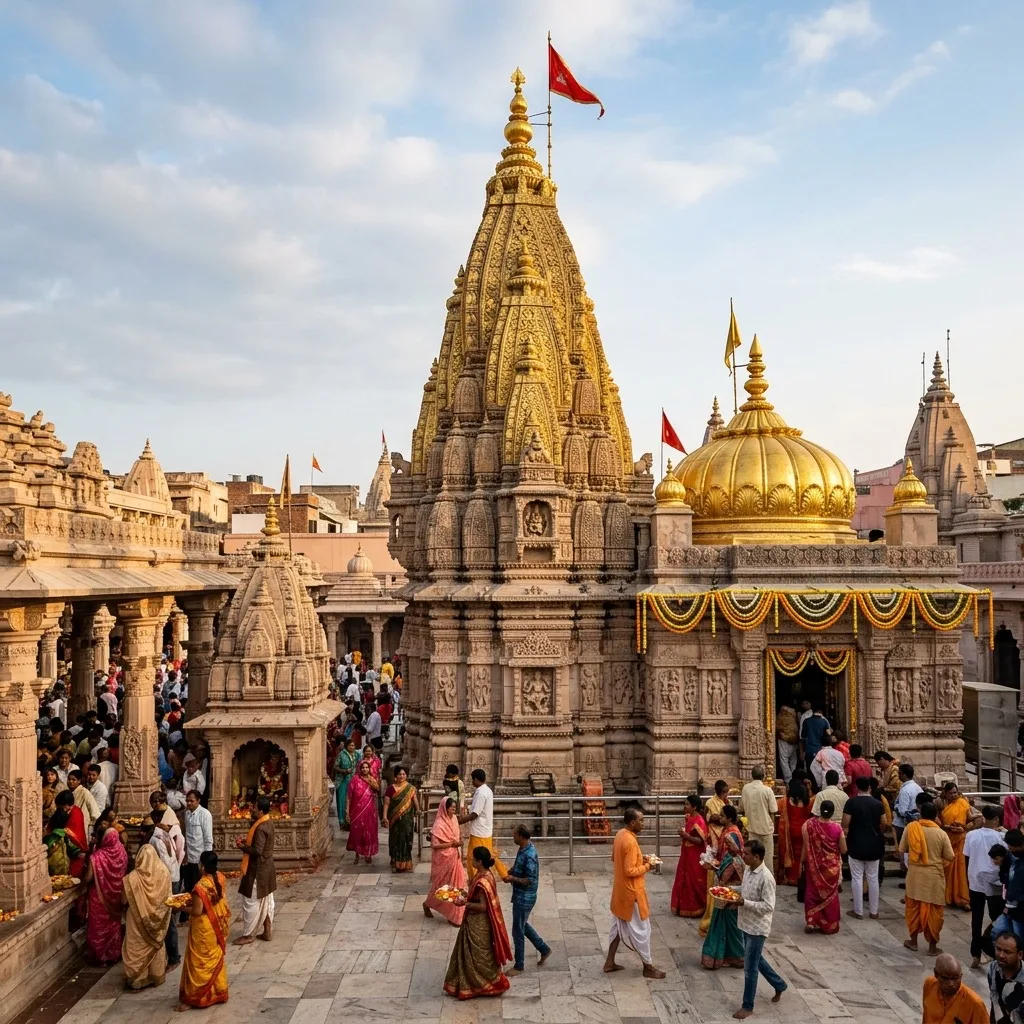
Shiva devotion is also shaped by pilgrimage. Kashi Vishwanath, Kedarnath, and Somnath are not just travel destinations; they are places where theology, memory, and devotion become tangible. Temple pages help readers connect Shiva’s symbolic meaning with geography, history, and living ritual.
The most helpful next steps after this page are usually:
- Shiva aarti for daily praise and evening prayer
- Mahamrityunjaya Mantra for healing, steadiness, and focused chanting
- Shiva Chalisa for a fuller devotional recitation
- Mahashivratri for festival context
- Shiva temple pages for pilgrimage and darshan planning
When those pages are connected properly, the Shiva hub stops being a generic summary and becomes a real devotional starting point.