 Devpur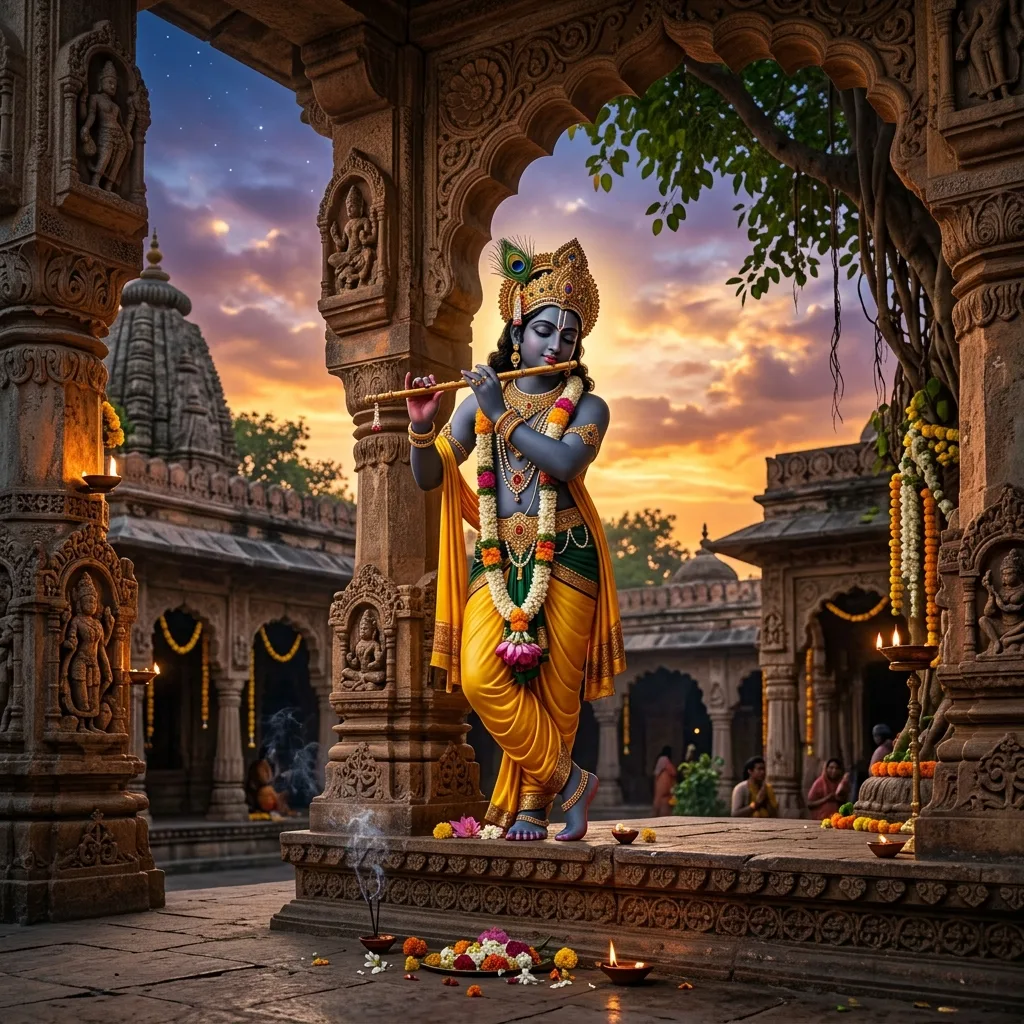
Krishna as guide and friend
Lord Krishna is loved not only as a divine figure but also as a guide who speaks directly to human struggle. His presence in Hindu tradition is personal and practical. He teaches that spiritual life is not separate from work, family, duty, or emotion. Instead, these parts of life become meaningful when they are guided by clarity and devotion.
Krishna in bhakti tradition
Krishna bhakti is rooted in affection, trust, and remembrance. Devotees may approach him as child, friend, lover, or teacher, but the core feeling remains the same: loving surrender without losing responsibility. That is why Krishna devotion feels warm rather than distant. It invites people into relationship, not just ritual.
Krishna and dharma
The Bhagavad Gita makes Krishna central to the idea of dharma in action. He does not tell Arjuna to escape the world. He tells him to face it with wisdom, discipline, and detachment from ego. That lesson still matters for students, parents, workers, and anyone making difficult choices under pressure.
Names, symbols, and meaning
Krishna’s names carry devotional meaning. Govinda suggests protection and shelter. Gopal suggests nurturing care. Madhava points to sweetness and divine beauty. His flute symbolizes attraction through truth and grace rather than force. His chariot teaching symbolizes guidance in the middle of life, not outside it.
How to practice Krishna devotion at home
A simple routine works best for most households:
- Clean the prayer area and sit quietly for a moment.
- Offer a short prayer or chant a Krishna mantra.
- Read a few lines from the Bhagavad Gita or a Krishna bhajan.
- Remember one dharmic action to apply that day.
- End with gratitude rather than hurry.
This kind of routine is small enough to sustain and deep enough to reshape attention over time.
Janmashtami and festivals
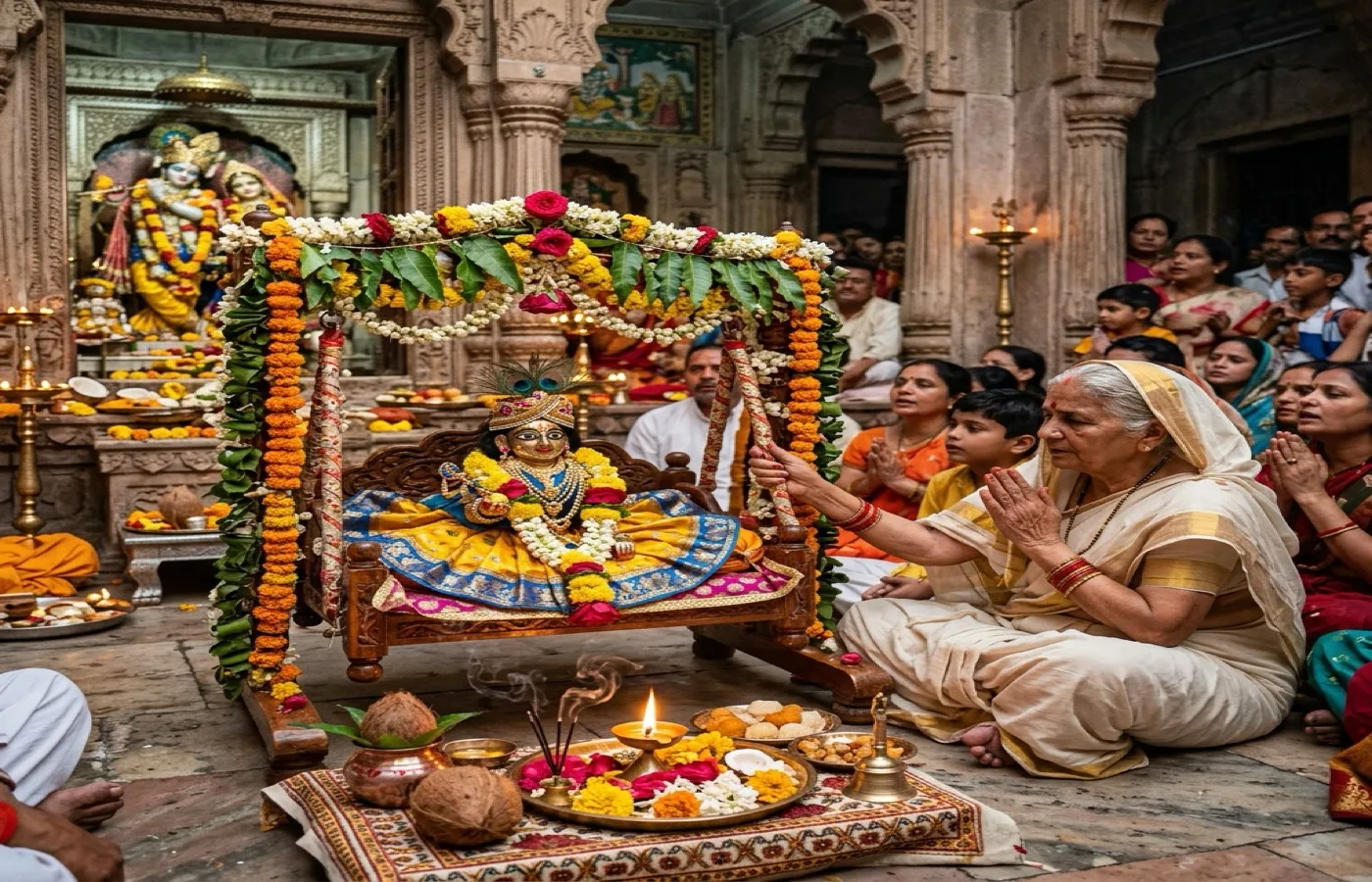
Janmashtami is the most widely observed festival associated with Krishna. It highlights his birth, playful grace, and spiritual promise. Families use the day for fasting, midnight prayers, kirtan, and storytelling. But the deeper purpose of the festival is to renew devotion, not just celebrate tradition.
Krishna for modern life
Krishna’s teachings remain relevant because they speak to conflict, doubt, ambition, and emotional imbalance. Many people struggle with overthinking or pressure to perform. Krishna’s message offers an alternative: do your duty, keep your heart steady, and let devotion protect your judgment.
Best ways to continue the Krishna path
Krishna devotees often move through several connected practices rather than stopping at one page. A strong path is:
- read Janmashtami for the festival context,
- listen to or recite Gayatri Mantra for daily focus,
- visit Tirupati Balaji for temple devotion,
- compare Krishna bhakti with the disciplined devotion of Hanuman,
- use the Hindi profile for a parallel study path.
Families and students
Krishna pages work well for families because they combine story, philosophy, and practice. Children can remember the flute, the cowherd, and the Gita lesson, while adults can apply the same tradition to decisions and responsibilities. Students often find Krishna especially helpful when they need calm thinking during uncertainty.
Krishna in difficult choices
One of the most practical reasons Krishna remains so widely read is that he speaks to moments when people are unsure what to do. In the Gita, the central issue is not abstract theory. It is hesitation, grief, duty, and the fear of making the wrong choice. That is why Krishna is often remembered when someone is facing conflict at work, disagreement at home, or a season of personal doubt.
Krishna does not ask the seeker to become emotionless. He asks the seeker to become clear. That difference matters. Clear thinking allows compassion without weakness, and action without panic. For many modern readers, this is the most useful part of Krishna devotion.
Krishna and inner freedom
Krishna bhakti also teaches inner freedom. This does not mean avoiding work or responsibilities. It means not letting ego control every decision. When a person acts only for praise, fear, or comparison, even success feels heavy. Krishna’s teaching offers another path: do the work, keep the heart steady, and release the need to own every result.
This teaching is especially helpful for people who carry too much mental pressure. It reduces the burden of perfectionism and creates room for sincerity. A small daily reminder of Krishna can turn ordinary routines into disciplined practice.
How to read this page well
This page works best if you use it as a living reference instead of a one-time profile. Read one section, pause for a moment, and think of one action you can apply in the next 24 hours. That action might be a short mantra, a calmer response to stress, or a few lines from the Gita. The point is to connect knowledge with behavior.
If you revisit the page during Janmashtami, during a family prayer, or during a difficult decision, the same content will mean something slightly different each time. That is normal. Krishna-centered reading becomes deeper through repetition because the teaching is designed for real life, not just memorization.
Final takeaway
Lord Krishna remains central because he joins love and wisdom in one living tradition. He is not only a figure of story or art. He is a guide for action, a source of comfort, and a reminder that dharma can be lived with beauty. If you keep this page as a practical reference, Krishna devotion becomes less abstract and more usable in daily life.