Total Chaupais
40
 Devpur
 Chalisa of Lord Hanuman
Hanuman Chalisa is one of the most recited Hindu hymns and is cherished for devotion, courage, discipline, and inner resilience.
Reviewed by Devpur Editorial Team on 31 March 2026
Total Chaupais
40
Language
English
PDF Support
Not available
श्रीगुरु चरण सरोज रज, निज मन मुकुर सुधारि।
बरनऊँ रघुवर बिमल जसु, जो दायक फल चारि॥
Shri Guru Charan Saroj Raj, Nij Man Mukur Sudhari.
Barnau Raghuvar Bimal Jasu, Jo Dayak Phal Chari.
The Chalisa invokes Hanuman's grace, devotion to Ram, and strength to overcome fear, confusion, and obstacles.
Hanuman Chalisa is not only a bhajan. It is a devotional map that connects humility, courage, Ram-bhakti, and disciplined service. That is why it remains one of the most widely used Hindu prayers in homes, temples, and family gatherings.
The opening verse itself sets the tone: the devotee begins by cleaning the mind and then praising the glories of Shri Ram. This matters because the Chalisa is not separate from Hanuman bhakti. It is one of the most practical ways to enter it.
The Chalisa is useful because it teaches through repeated devotional images. Hanuman is praised as strong, loyal, wise, and fully surrendered to Ram. That combination matters. Strength without humility can become ego. Devotion without action can become passive feeling. Hanuman Chalisa joins the two.
Readers often notice four recurring themes:
When you read the verses with these themes in mind, the text becomes easier to remember and more useful in daily life.
You do not need a complicated setup to recite Hanuman Chalisa well. A clean place, a fixed time, and a calm mind are enough.
Many devotees also use a mala and count the recitations on Tuesdays and Saturdays. That is helpful, but not mandatory. What matters most is that the practice remains consistent and sincere.
Tuesdays and Saturdays are especially popular for Hanuman worship because they are associated with disciplined devotional focus and relief from obstacles. On these days, many devotees recite Hanuman Chalisa before work, before temple visits, or in the evening after a day of effort.
If you only have a few minutes, even one careful recitation is meaningful. The point is not to build pressure. The point is to keep a reliable devotional rhythm that you can actually maintain.
Hanuman Chalisa and Hanuman Aarti belong naturally together. The Chalisa expands the devotional mood through repeated praise and memory of Hanuman’s qualities. The Aarti closes the practice with light, gratitude, and surrender.
A common flow is:
This sequence works well because it moves from remembrance to offering. If you are building a home routine, this is one of the simplest and most stable devotional patterns you can keep.
If you only read the Chalisa as sound, it still helps. But if you understand even a few recurring ideas, the practice becomes much deeper. The text repeatedly returns to protection, courage, and Ram-bhakti. That means it is not only a request for blessings. It is also a reminder to live with steadiness and service.
For that reason, many devotees find it helpful to read the meaning page alongside the full text. The goal is not academic analysis. The goal is a recitation that actually changes attention, mood, and behavior.
Hanuman Chalisa is a very family-friendly practice because it can be shared across ages. Children can learn a line at a time. Adults can explain the stories behind the verses. Older family members can use it as a stable daily recitation.
For beginners, the best way to start is to choose one fixed time and one repeatable format. Do not worry about perfect memorization at the beginning. Familiarity grows through repetition.
If the Chalisa feels dense at first, use the meaning page in short sessions rather than trying to solve everything in one sitting. A few verses, a short pause, and one line of reflection is enough to make the recitation feel more personal. The value of meaning study is not speed. It is clarity.
You may also notice that the Chalisa works differently in different moods. When you are anxious, it feels protective. When you are tired, it feels steadying. When you are distracted, it feels like a call back to order. This is part of why the text stays useful across different stages of life.
One common mistake is rushing through the text just to complete a count. Another is using the Chalisa only when life is difficult and then forgetting it later. A third mistake is separating it completely from Hanuman Aarti or from Ram-bhakti.
The text becomes most useful when it is part of a living devotional routine rather than a rare emergency prayer.
Some devotees like to pair Hanuman Chalisa with a short राम नाम जapa, a few minutes of quiet sitting, or a simple lamp offering. That can be helpful, but the key is not to overload the routine. If the practice becomes too large, it becomes harder to keep every day. A small, repeatable sequence is usually better than an ambitious one that fades in a week.
If you are building a home routine for children or elders, keep the structure simple: Chalisa, brief silence, and Aarti when time permits. That balance keeps the devotion clear and easy to sustain.
If you want a simple rule, keep this: read slowly, repeat regularly, and connect the verses to daily conduct. When the words enter your routine, the Chalisa stops being only a sacred text and becomes a stable devotional companion.
Hanuman Chalisa remains powerful because it is both devotional and practical. It helps the devotee remember Hanuman’s courage, his loyalty to Ram, and his disciplined service. If you use this page well, it should help you chant more clearly, understand the text more deeply, and build a stable practice that works on Tuesdays, Saturdays, and every other day too.
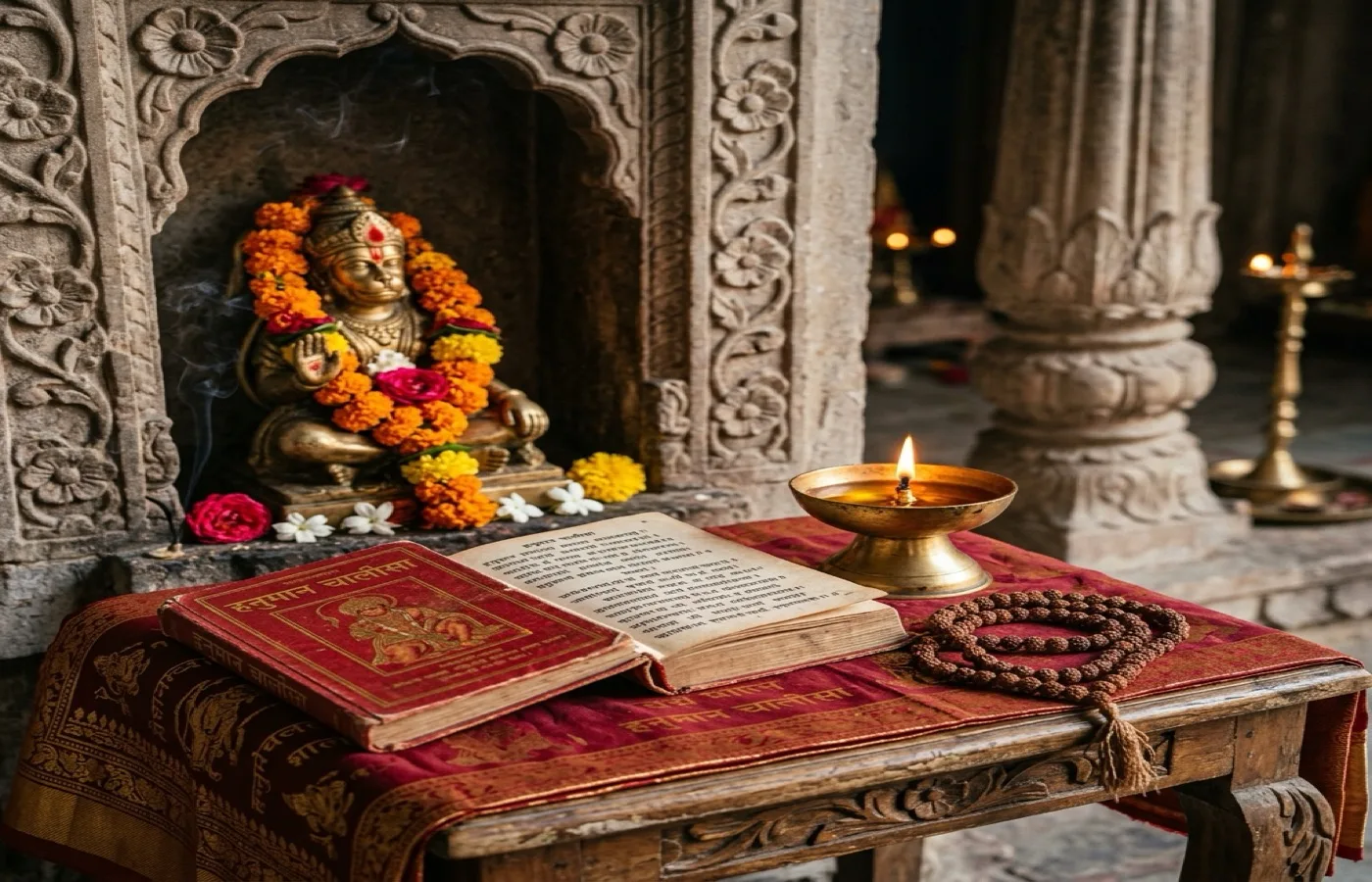
Lord Hanuman represents fearless devotion, disciplined service, and unwavering dedication to dharma in Hindu traditions.
This page explains the commonly sung Hanuman Aarti, its meaning, recitation flow, and practical use in daily bhakti and Tuesday or Saturday worship.
This page helps you study Hanuman Chalisa verse meanings with context, themes, and a simple method for combining meaning with recitation.
Gayatri mantra is a foundational Vedic prayer for clarity, wisdom, and spiritual illumination in daily life.
Hanuman bhakti stories show how devotion becomes visible through service, courage, humility, and loyalty to dharma.
Its verses are emotionally powerful, easy to include in routine, and strongly associated with courage, protection, and faith.
Yes, beginners can start with reading from text and slowly memorize verses while maintaining steady devotion and clear pronunciation.
Many devotees recite it for emotional steadiness, confidence, and resilience during demanding phases of life.
Frequency depends on personal practice, but regular daily or weekly recitation is commonly followed, especially on Tuesdays and Saturdays.
Yes, many households perform Chalisa first and then Aarti as a complete devotional sequence.
Read a few verses slowly, understand the devotional context, and repeat them regularly so the meaning becomes part of the recitation habit.