Total Chaupais
40
 Devpur
 Chalisa of Lord Hanuman
This page helps you study Hanuman Chalisa verse meanings with context, themes, and a simple method for combining meaning with recitation.
Reviewed by Devpur Editorial Team on 31 March 2026
Total Chaupais
40
Language
English
PDF Support
Not available
श्रीगुरु चरण सरोज रज, निज मन मुकुर सुधारि।
बरनउँ रघुवर बिमल जसु, जो दायक फल चारि॥
Shri Guru Charan Saroj Raj, Nij Man Mukur Sudhari.
Barnau Raghuvar Bimal Jasu, Jo Dayak Phal Chari.
This page explains the Chalisa as a path of devotion, courage, humility, and service, with each verse pointing toward steady character and remembrance of Rama.
The Hanuman Chalisa is often memorized quickly, but its power grows when the words are understood. Verse meaning matters because it changes chanting from repetition into relationship. Instead of simply finishing a prayer, the devotee begins to notice what the prayer is asking for: a clear mind, steady devotion, fearlessness, and service rooted in humility.
The opening verse already shows this direction. It asks for the mind to be polished like a mirror. That image is practical. It suggests that devotion is not only about praise of Hanuman; it is also about inner cleaning. The prayer then begins with the glory of Raghuvar, showing that Hanuman’s devotion is inseparable from remembrance of Rama.
A helpful way to study the Chalisa is to keep the meaning close to the sound of the verse. Read one line slowly, say it aloud, and pause long enough to notice what it is teaching. Then move to the next line. This keeps the study from becoming abstract.
For many people, a simple three-step rhythm works well:
That rhythm is small enough to sustain daily and deep enough to create real devotional learning. If you try to master all meaning at once, the prayer can feel heavy. If you study it in small pieces, the Chalisa becomes familiar and alive.
Several major themes appear again and again in the text:
These themes are why the Chalisa remains meaningful across generations. It is not only a devotional poem. It is a compact guide to character.
The opening doha asks for a cleansed inner mirror. This is a reminder that spiritual life starts with self-preparation. The first task is not praise of Hanuman but readiness of the mind.
When the text praises Hanuman as the servant of Rama, it places devotion above ego. Hanuman’s identity is not built on fame. It is built on alignment with dharma. That is why his image has so much emotional force.
Verses describing his strength should not be read as physical power alone. They also point to mental firmness, emotional steadiness, and the ability to act without panic.
Verses about wisdom and speech suggest that devotion should shape how we think and speak, not only what we recite. A true reading of the Chalisa should therefore leave the devotee a little more calm, a little more respectful, and a little less restless.
If you are new to the Hanuman Chalisa, do not begin by trying to understand every line at once. Start with the first doha, the opening praise of Hanuman, and one or two lines about service and courage. Repeat those until the ideas become familiar.
Then move to a small daily pattern:
This approach keeps devotion sustainable. Beginners often stop because they think they must learn everything immediately. In reality, steady repetition with small understanding is more powerful than forced speed.
The point of verse meaning is not only devotional knowledge. It is practical transformation. The Chalisa becomes useful when its themes show up in ordinary life:
In that sense, the meaning of the Chalisa is not separate from the life of the devotee. It is meant to shape how a person responds to pressure, service, and responsibility.
After this meaning guide, the most helpful next step is to return to the full Hanuman Chalisa and recite it again with a slower pace. If you want a parallel Hindi study path, use the Hindi meaning page alongside this one. If you prefer a practice-centered route, pair the meaning study with Hanuman Aarti or Hanuman.
Hanuman Chalisa meaning study works best when the verse, the sound, and the takeaway remain connected. The goal is not to turn the Chalisa into a lecture. The goal is to let the prayer teach humility, courage, and devotion one verse at a time. When that happens, recitation becomes deeper, calmer, and far more personal.
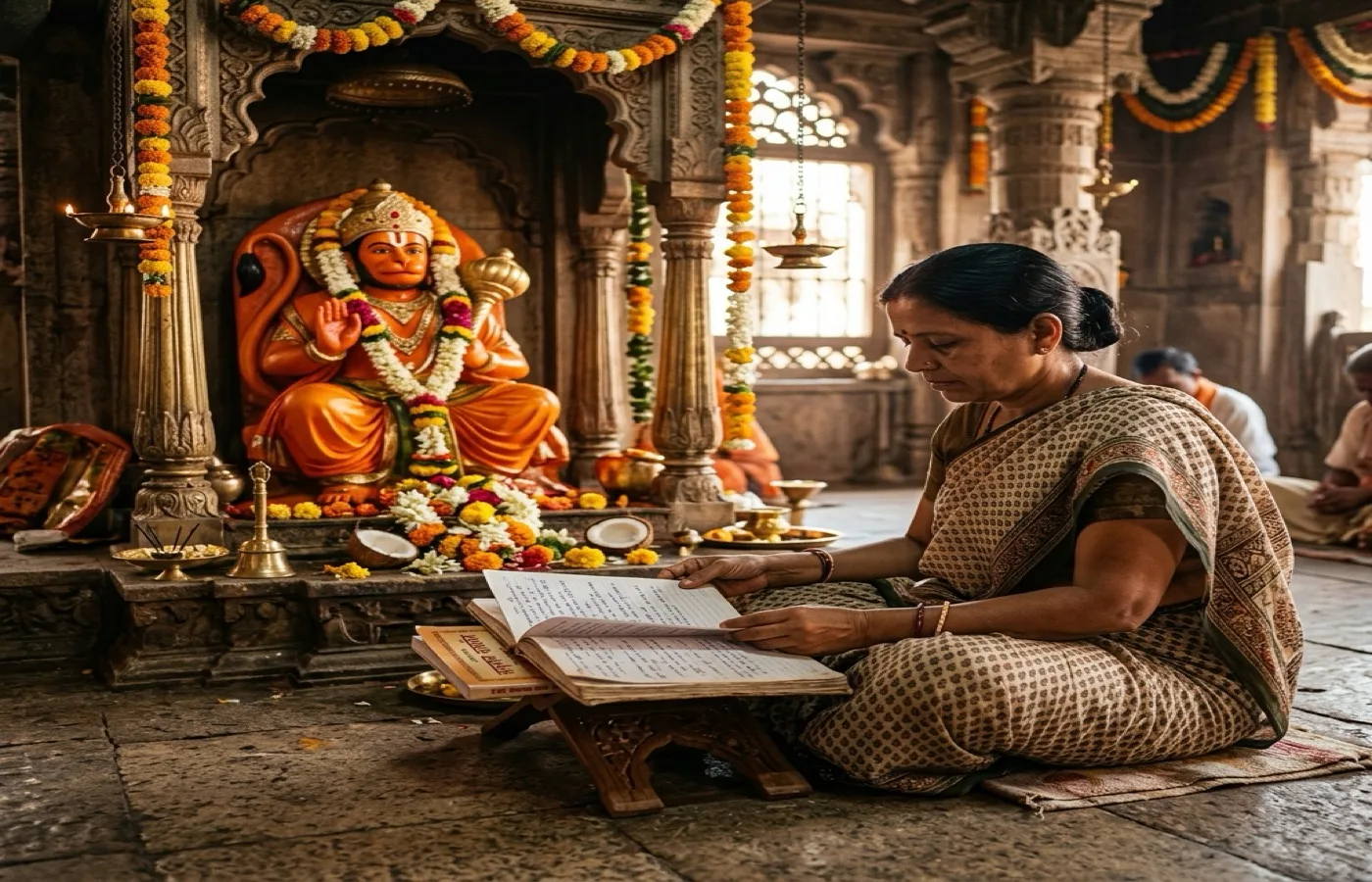
Lord Hanuman represents fearless devotion, disciplined service, and unwavering dedication to dharma in Hindu traditions.
This page explains the commonly sung Hanuman Aarti, its meaning, recitation flow, and practical use in daily bhakti and Tuesday or Saturday worship.
Hanuman Chalisa is one of the most recited Hindu hymns and is cherished for devotion, courage, discipline, and inner resilience.
Studying the meaning turns recitation into mindful devotion. It helps you notice the verses about humility, service, courage, and remembrance instead of treating the text as only a rhythm to memorize.
Both approaches work. Some devotees first read the meaning to build context, while others chant first and study the meaning afterward for deeper reflection.
Beginners should notice that the prayer begins with a humble salutation to the guru and a request to clean the inner mind. That sets the tone for the entire text.
When you understand the thought behind each verse, memorization becomes easier because the lines are connected to emotion, imagery, and purpose.
No. This page is a study guide for meaning. It works best alongside the full Hanuman Chalisa text so you can move between recitation and interpretation.
Yes. Meaning pages are especially useful for beginners and families because they make the prayer feel understandable, not distant or mechanical.