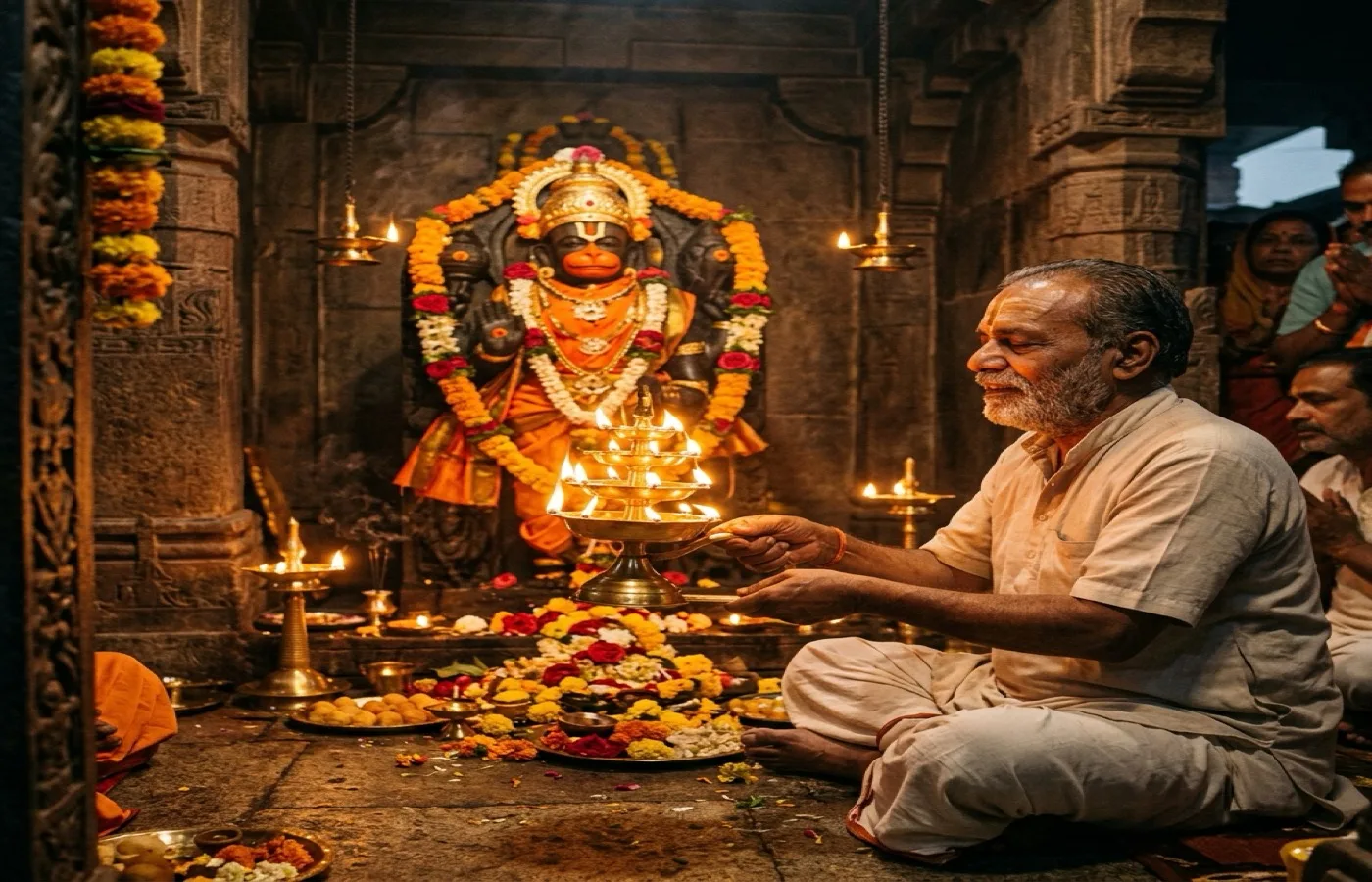
Hanuman Aarti in daily bhakti
Hanuman Aarti is short, memorable, and emotionally direct. That is part of why it stays so popular in homes and temples. It closes the prayer cycle by expressing gratitude for protection, courage, and the power of disciplined service. When recited with focus, it helps the mind shift from worry to steadiness.
Meaning of the key verses
The opening line praises Hanuman as the one who removes distress and serves Shri Ram. The reference to Lanka, Lakshman, and Ahiravan reminds the devotee of Hanuman’s decisive action in the Ramayana. These verses are not only narrative. They remind the listener that strength becomes meaningful when it protects dharma and helps others.
The final verses often return to blessing language: those who sing the aarti with sincerity are said to receive peace, devotion, and a stronger connection to Ram-pada. That closing tone makes the aarti feel like both praise and prayer.
What the symbols suggest
In Hanuman worship, power is never separate from humility. The lamp, flowers, and folded hands all reinforce this lesson. Hanuman is remembered as the one who can cross oceans, defeat fear, and carry life-saving strength, but he does all of it in service to Shri Ram. That is why the aarti is more than a heroic song. It is a reminder that strength must stay disciplined.
The mention of Lanka and Lakshman also keeps the focus on action. Hanuman Aarti tells the devotee that devotion should help in practical moments, not only in private feeling. A prayer that strengthens conduct becomes useful in work, family, and hardship.
Why this aarti works well for beginners
Beginners often need something they can repeat easily without losing the thread. Hanuman Aarti works well because the tune is direct, the imagery is vivid, and the moral center is obvious. A child can understand that Hanuman protects devotees. An adult can understand that Hanuman’s power is meaningful because it is obedient and selfless.
That makes the aarti a good entry point into bhakti practice. It does not overwhelm the reader with complexity, yet it still points toward a larger devotional life built around Ram, service, and courage.
Simple home method
A practical Hanuman Aarti sequence can stay very simple.
- Clean the prayer area and place a Hanuman image or murti on the altar.
- Light a diya and offer flowers or सिंदूर if available.
- Recite Hanuman Chalisa or a short Ram name japa if that is part of your routine.
- Sing the aarti clearly, without rushing.
- Sit quietly for a few moments and make a small sankalp for courage, patience, or service.
The routine does not need to be long. It needs to be steady.
What to focus on while singing
The best way to sing Hanuman Aarti is to focus on three things at once: clarity of sound, steadiness of breath, and the feeling of service. If the recitation is rushed, the meaning gets thin. If it is too slow and strained, the devotion becomes distracted. A balanced pace is usually best.
Many devotees find it helpful to pause for a second on the words that describe Hanuman’s deeds. That pause turns the aarti into a form of remembrance. Instead of merely finishing a text, the devotee reflects on strength used for a good purpose.
Tuesday, Saturday, and special occasions
Many devotees especially remember Hanuman on Tuesday and Saturday. That tradition comes from the desire for protection, strength, and relief from obstacles. Hanuman Aarti is also commonly used after a visit to a Hanuman temple or after reading the Chalisa. It works well in family worship because the tune is easy to learn and the message is easy to understand.
What the aarti teaches
Hanuman Aarti teaches three clear lessons:
- courage without ego,
- power in service,
- devotion that acts, not just speaks.
That is why this aarti is useful during stressful periods. It does not ask the devotee to escape life. It asks the devotee to meet life with clarity, discipline, and faith.
A family-friendly practice
Hanuman Aarti also works very well as a shared family practice because the lesson is simple and positive. One person can light the lamp, another can read the line, and children can repeat the refrain. This shared rhythm helps the home feel centered without becoming complicated.
If your family already reads Hanuman Chalisa, placing the aarti at the end gives a natural closing. If not, the aarti can stand alone and still create a complete devotional moment.
Practical reminder
If pronunciation is difficult at first, read slowly and return to the English transliteration until the words feel natural. The goal is not performance. The goal is to let the sound, meaning, and devotion settle together.
For children and beginners, this is often one of the easiest aartis to start with because it is compact and action-oriented. Over time, the prayer becomes a habit of strength rather than a memorized song alone.
Final takeaway
Hanuman Aarti stays enduring because it gives a clear devotional shape to courage. It teaches that service is not weakness, that discipline is not dry, and that protection can be a form of love. When sung with attention, it becomes a short but powerful way to remember the meaning of Hanuman bhakti in ordinary life.
 Devpur