 Devpur
 What the Mahamrityunjaya Mantra means
The Mahamrityunjaya Mantra is a prayer to Shiva in his Tryambaka form, the three-eyed Lord who sees beyond fear and confusion. Its core message is not superstition or panic. It asks for protection, inner steadiness, and release from what binds the mind.
Read simply, the mantra says: may we worship the fragrant, nourishing Lord and be freed from the bondage of death so that we move toward spiritual wholeness. That is why it is often recited when a devotee wants courage, composure, and a calmer heart.
When people recite it
Devotees often chant this mantra in the morning, before sleep, on Mondays, during Shravan, and on Mahashivratri. Some also recite it during personal stress, family concern, or any time they want to return to Shiva-centered practice.
The best use is steady use. A short daily routine is usually more sustainable than occasional long sessions.
How to chant it properly
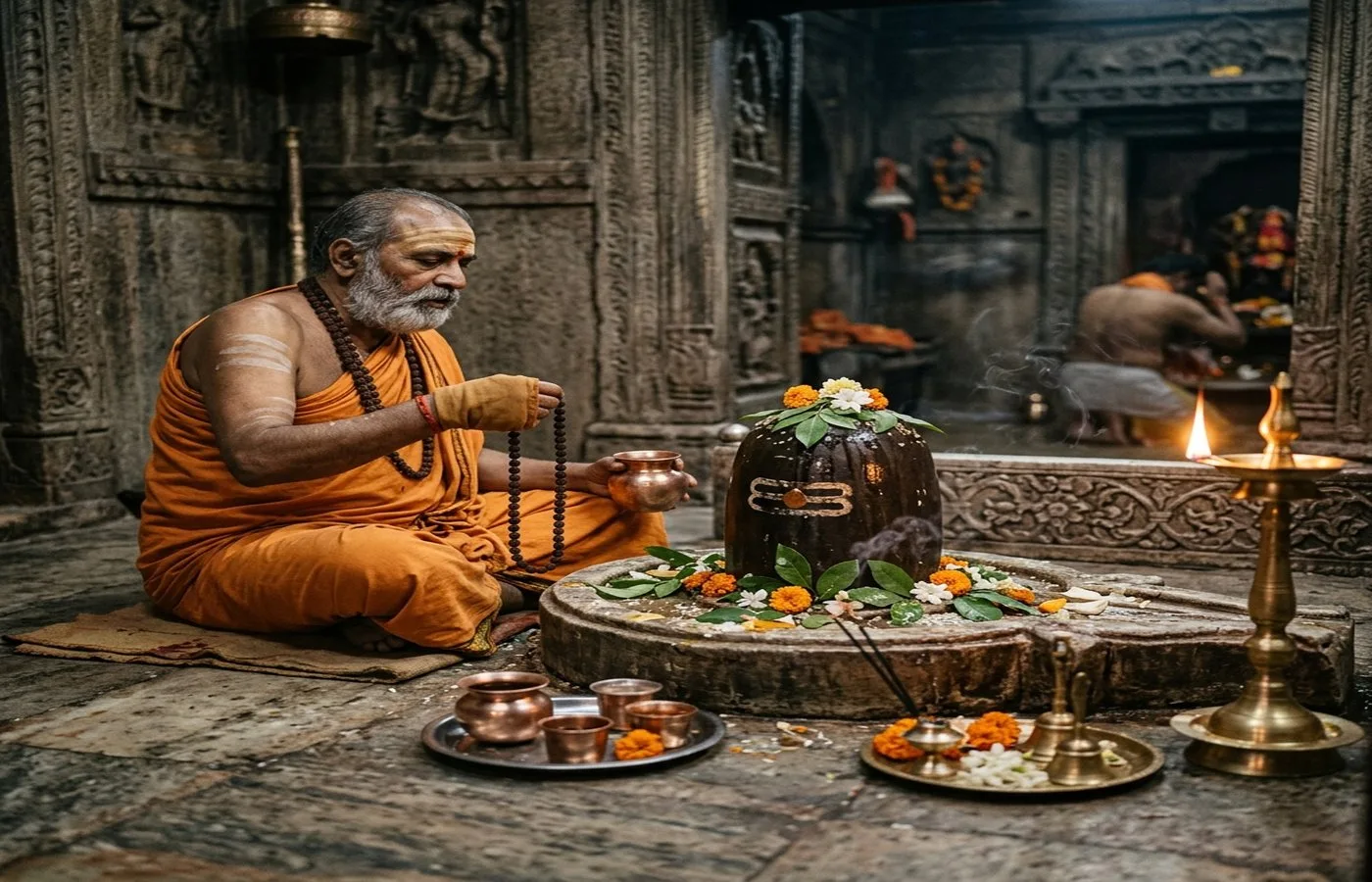
Sit in a clean place, keep the spine comfortable, and chant with a slow and clear rhythm. You can use a mala, count on the fingers, or keep a simple notebook for your rounds. The goal is not speed. The goal is attention.
If you are learning the sound, chant with the Sanskrit line first and then read the meaning once or twice. That keeps the mind from drifting into mechanical repetition.
108 japa guidance
One mala equals 108 beads, so 108 japa is the standard form for a focused session. If that feels too heavy at first, begin with 11, 21, or 27 repetitions and increase gradually. Consistency matters more than forcing a large count on day one.
For home practice, one good pattern is:
- Wash hands and face.
- Sit quietly for a moment.
- Chant one full round.
- Pause and reflect on the meaning.
- End with a simple prayer to Shiva.
Why this mantra is linked to Shiva worship
This mantra is not separate from Shiva devotion. It points directly toward Shiva as the protector, witness, and guide. For many devotees, it complements Shiva Aarti, Rudra recitation, and the simple habit of remembering Shiva before work, study, or prayer.
The connection is important: the mantra is meant to deepen trust, not create fear. When recited well, it becomes a way to place anxiety in Shiva’s care and return to inner steadiness.
Healing and fearlessness, used responsibly
Many people approach this mantra during illness, fear, or emotional strain. That is understandable, but it should be framed responsibly. The mantra is a spiritual practice that can support courage, patience, and hope. It should not be treated as a replacement for professional medical advice or emergency care.
Used wisely, it helps the devotee remain calm enough to act well, pray clearly, and keep faith without losing practical judgment.
A simple weekly practice
If you want a manageable routine, chant once daily on ordinary days and add a longer session on Monday or Mahashivratri. Keep the same place, the same time, and the same count for at least two weeks so the habit becomes natural.
For beginners, even a short daily round with correct pronunciation and honest attention is a strong start.
Common mistakes to avoid
Do not rush the sounds just to finish the count. Do not treat the mantra like a magical shortcut. Do not worry if your practice is small at first. A modest, sincere routine is better than a large routine you cannot maintain.
The mantra grows through repetition, understanding, and steadiness.
Meaning phrase by phrase
The opening word, Om, centers the mind. Tryambakam points to Shiva as the three-eyed witness who sees beyond surface fear. Yajamahe means that the devotee offers worship with attention, not haste. Sugandhim and Pushtivardhanam describe the nourishing, sustaining presence of the Lord, while Urvarukamiva Bandhanan uses the image of a ripe fruit separating from the vine to suggest release from bondage. Mrityor Mukshiya Maamritat is the closing plea: free us from what limits life and lead us toward the undying truth.
That meaning matters because it keeps the mantra from becoming a vague sound. When the words are understood, the mind chants with purpose.
Who can use this mantra
This mantra is often chosen by people who want a stable Shiva practice but do not yet feel ready for longer ritual forms. It works well for beginners, household devotees, and anyone who wants a short, repeatable prayer. The key is respect. Sit properly, keep the count manageable, and do not use the mantra as a substitute for sleep, medical care, or practical action.
If your mind is restless, start with a few repetitions and let the rhythm settle. A small, sincere session often works better than a long session performed in tension.
How it fits a Shiva-centered routine
Many devotees pair the Mahamrityunjaya Mantra with water offering to the Shivling, a lamp, or a short reading from Shiva stories. Others chant it after Shiv Aarti or before Shiva Chalisa. There is no single compulsory sequence. What matters is that the routine feels steady, clean, and devotionally honest.
If you want one simple pattern, keep it the same for two weeks. Use the same time, the same seat, and the same count. That repetition turns a spiritual idea into a habit the heart can actually keep.