2025
February 26, 2025
 Devpur
 Festival linked to Lord Shiva
Mahashivratri is a major Shiva festival observed with night vigil, mantra chanting, fasting, and temple or home worship.
Reviewed by Devpur Editorial Team on 31 March 2026
2025
February 26, 2025
2026
February 15, 2026
Duration
1 day(s)
Mahashivratri is the night most strongly associated with Shiva worship, inner discipline, and wakeful devotion. Many devotees treat it as a yearly reset for the mind: a time to reduce distraction, increase prayer, and remember that quiet attention is itself a form of practice.
The festival is not only about a temple visit. It is also about the rhythm of the whole day and night: preparing the home, choosing a vrat style that fits health, offering water or bilva leaves with care, and keeping the mind steady through chanting and reflection.
The vrat is usually observed in a way that fits family tradition and personal health. Some devotees keep a full fast, some take fruits or milk, and some follow a lighter sattvic meal. The important part is sincerity and consistency, not forcing a rule that the body cannot sustain.
Jagran means staying awake in remembrance of Shiva. For many families, that does not mean a rigid all-night performance. It can mean staying alert for a few prayer sessions, reading Shiva stories, chanting Om Namah Shivaya, and keeping the household atmosphere calm and devotional.
A simple Mahashivratri rhythm can be followed in four parts.
This works at home and in many temple settings. The point is not complexity. The point is regular attention.
Bilva leaves are central to Mahashivratri worship because they are tied to Shiva devotion in many traditions. They should be offered respectfully and without rush. If you only have water, that is still a valid and meaningful offering.
Jal, milk, and bilva are often used together in ritual practice, but the devotional value comes from intention and steadiness. Many people over-focus on items and under-focus on the mood of worship. Mahashivratri is a good night to correct that balance.
Fasting should be realistic. Children, elders, pregnant devotees, and anyone with a health condition should choose a form of observance that is safe. A light meal, fruit-only vrat, or modified fast can still be sincere.
If you are new to fasting, plan the day ahead. Drink enough water if your tradition allows it, keep the schedule light, and do not treat exhaustion as proof of devotion. Mahashivratri should build steadiness, not weaken it.
Temple observance gives you collective energy, bells, aarti, and a shared Shiva atmosphere. Home observance gives you flexibility, privacy, and a quieter rhythm. Neither is superior in every situation.
If the temple is crowded, a good home puja can be just as meaningful. If you go to a temple, arrive early, follow queue rules, and keep your expectations modest. The best visit is the one that leaves you calmer, not only busier.
For many devotees, the most useful Mahashivratri focus is simple:
That last part matters. A festival should improve daily conduct, not stay isolated from it.
If you are celebrating with family, divide the work so the night stays peaceful. One person can prepare the puja area, another can manage offerings, and another can keep track of timing and aarti. Small coordination makes the night smoother.
If you are observing alone, keep the practice even simpler. One lamp, one mantra, one offering, and one honest prayer are enough. Mahashivratri grows stronger when it is doable every year.
A calm finish matters more than a long performance, especially for families.
It is the idea of staying awake in Shiva remembrance, reducing distraction, and making prayer more disciplined and inward.
No. Many devotees observe modified fasting based on health, age, and family tradition. The best vrat is the one that is safe and sincere.
Yes. A clean space, water or bilva offering, mantra japa, and a short aarti can make a complete home observance.
Bilva leaves are a traditional Shiva offering and are used as a respectful symbol of devotion and simplicity.
A beginner should keep the practice simple: a short fast if appropriate, a basic Shiva puja, slow chanting, and a calm night prayer.
Jagran should be approached as alert remembrance, not as exhaustion. A few meaningful prayer sessions are better than an unfocused all-night routine.
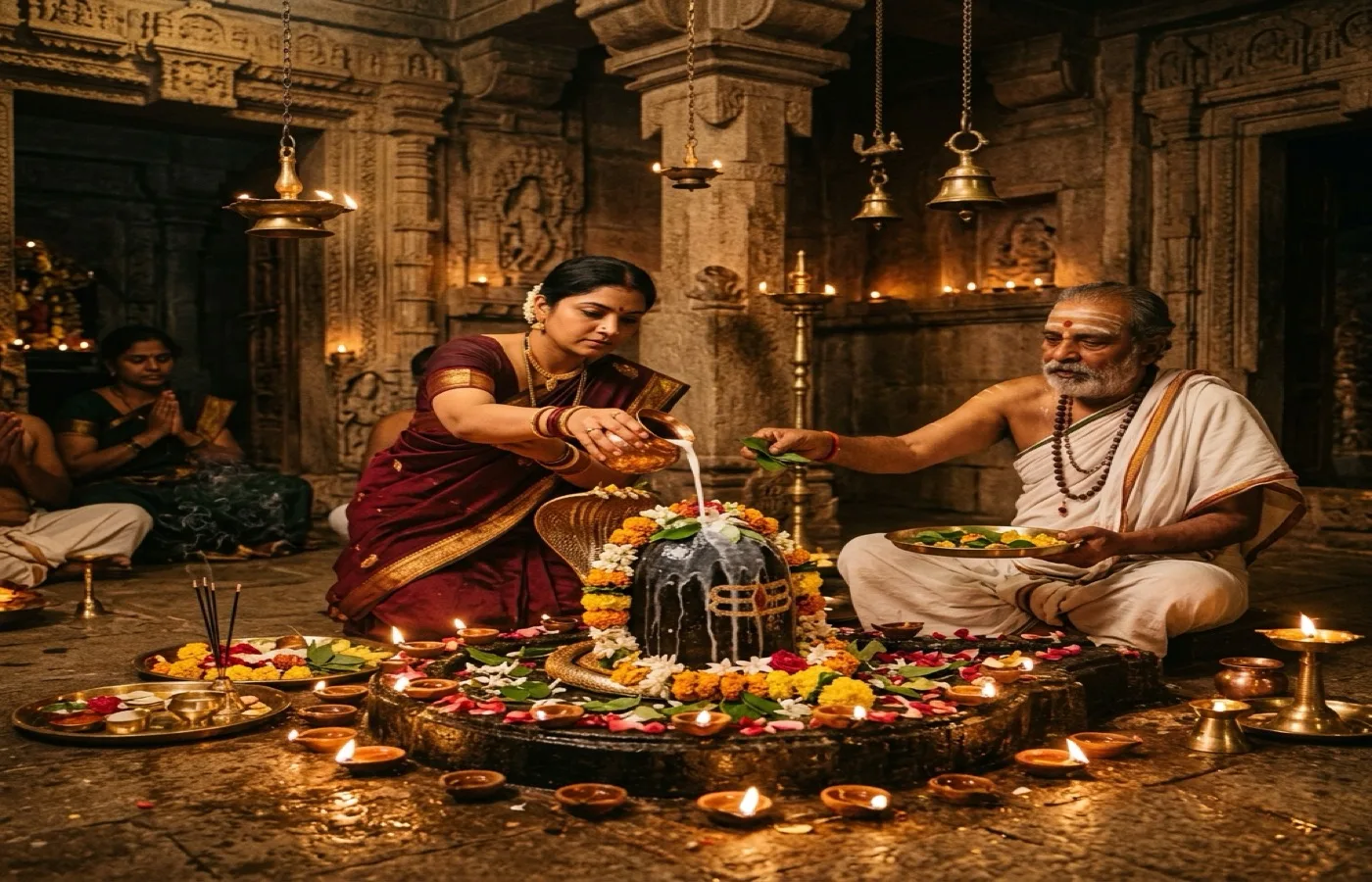
Lord Shiva is worshipped as the deity of transformation, inner stillness, protection, and disciplined spiritual practice.
This page explains the popular Om Jai Shiv Omkara Shiv Aarti with full lyrics, practical meaning, and a simple routine for daily Shiva worship.
A practical guide to the Mahamrityunjaya Mantra with meaning, chanting steps, and respectful use in Shiva devotion.
A people-first guide to Kashi Vishwanath temple with pilgrimage planning, worship context, and practical advice for first-time and returning devotees.
This Shiva puja guide gives a clear beginner-friendly sequence for respectful daily or Monday worship at home.
It is one of the most significant Shiva observances, emphasizing night worship, mantra japa, and spiritual introspection.
Fasting is common but optional; devotees may choose full fast, partial fast, or sattvic meals based on health and tradition.
A simple practice includes Shiva mantra chanting, water or milk abhishek, light offering, and focused night prayer.
Yes, beginners can observe with basic puja, calm chanting, and sincere intention without complex rituals.
Many temples host extended darshan, special abhishek, and collective chanting throughout the night.