Duration
25 min
 Devpur
 This Shiva puja guide gives a clear beginner-friendly sequence for respectful daily or Monday worship at home.
Reviewed by Devpur Editorial Team on 31 March 2026
Duration
25 min
Difficulty
beginner
Materials
5
Steps
8
This guide is for anyone who wants a simple, respectful Shiva puja at home. It works well for beginners, working people with limited time, families that worship together on Mondays, and devotees who want a practical routine for Mahashivratri or other Shiva days.
The aim is not to create an elaborate ritual. The aim is to give you a steady method that can be repeated without confusion.
A home Shiva puja generally centers on cleanliness, water offering, bilva leaves, flowers, a lamp, and a short mantra or aarti. If you have a Shiva linga, the puja is usually directed toward it. If you do not, a framed image or a simple clean altar can still support sincere worship.
Bilva leaves are important because they are traditionally associated with Shiva devotion. Jal or water offering is equally central because it expresses humility and purification. Many devotees also use milk or panchamrit for abhishek when they want a slightly fuller ritual on Mondays or special days.
Om Namah Shivaya or a short Shiva mantra with a calm pace.This sequence is enough for a daily routine. You can expand it on special occasions, but the base flow should remain simple and repeatable.
For beginners, Om Namah Shivaya is the safest and most universal chanting choice. Many devotees repeat it 11, 21, or 108 times depending on time and comfort. If you know the words clearly, you may also chant the Mahamrityunjaya mantra on Mondays or during Mahashivratri observance.
The most important point is steadiness. Slow and clear chanting is better than fast chanting with weak focus.
Monday is a natural day for Shiva worship because many households already keep it as a Shiva-focused day. On Mondays, people often add bilva leaves, simple abhishek, and a slightly longer mantra round.
Mahashivratri is different because the mood is more observant and devotional. Many families keep the puja longer, stay awake for a while, or add extra chanting and aarti. If your schedule is limited, you can still do a sincere home puja with a clean setup, simple offering, and patient repetition.
Do not treat the puja like a rushed checklist. Rushing reduces focus and makes the ritual feel mechanical. Do not overload the setup with too many items if you are still learning. A small clean arrangement is better than a large confusing one.
Another common mistake is chanting too quickly or without knowing the words. It is better to learn a short mantra well than to repeat a longer one carelessly. Also, keep the puja space tidy before and after the ritual so the practice becomes sustainable.
Beginners should start with one lamp, one clean vessel of water, a few flowers, and a few bilva leaves. Add abhishek only when you are ready. If time is short, do the puja in ten minutes rather than skipping it entirely. A small daily practice often becomes stronger than an occasional long one.
If you worship with family, assign simple roles so the sequence stays calm. One person can bring the materials, another can chant, and another can tidy the altar afterward. This makes the puja easy to continue week after week.
Shiva worship works best when it balances stillness and simplicity. Water offering reminds the devotee of humility. Bilva leaves connect the ritual to tradition. Chanting steadies the mind. The diya and incense close the puja with a quiet sense of completion.
If you keep the same basic routine on Mondays, and expand it slightly on Mahashivratri, the puja becomes a living habit rather than a rare event.
Early morning is often preferred because the mind is quieter, but evening worship can work just as well if that is when your home is calm. The most important factor is not the hour itself but whether you can keep the same respectful sequence without hurry.
If you miss a day, simply return the next day with the same simple setup. A consistent pattern matters more than occasional perfection.
After closing the puja, keep the space neat and leave the lamp area safe and stable. Some devotees read a short Shiva verse, sit for a minute of silence, or make one practical commitment for the day. That small bridge from ritual to daily life is what makes home worship feel alive.
The best Shiva puja is the one you can perform with clarity, cleanliness, and consistency. Keep the ritual simple, keep the intention honest, and keep returning to it.
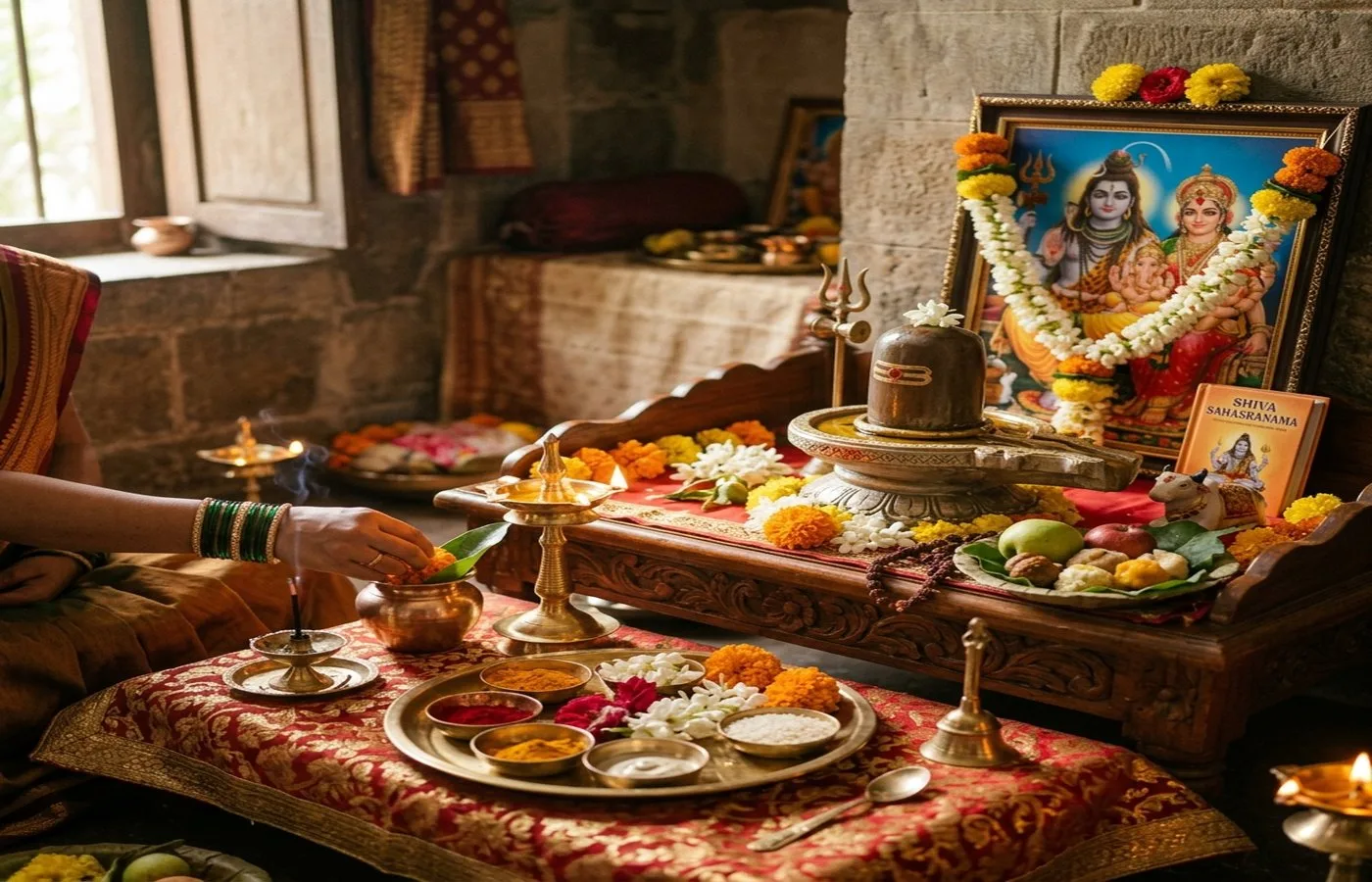
Lord Shiva is worshipped as the deity of transformation, inner stillness, protection, and disciplined spiritual practice.
This page explains the popular Om Jai Shiv Omkara Shiv Aarti with full lyrics, practical meaning, and a simple routine for daily Shiva worship.
A people-first guide to Kashi Vishwanath temple with pilgrimage planning, worship context, and practical advice for first-time and returning devotees.
Mahashivratri is a major Shiva festival observed with night vigil, mantra chanting, fasting, and temple or home worship.
Yes, daily Shiva puja can be done with a simple setup and consistent devotional discipline.
Basic items include water, bilva leaves, diya, flowers, and a calm clean worship space.
Monday is considered especially auspicious, but Shiva puja can be performed on any day with sincerity.
A beginner-friendly puja can be completed in approximately twenty to thirty minutes.
Yes, devotees often extend mantra chanting and abhishek steps during festival observance.