 Devpur
 What the mantra means
The Durga mantra commonly used in devotion is Om Dum Durgayei Namah. It is a short invocation to Maa Durga, asking for protection, courage, and steadiness. The sound is simple, but the intention matters: devotees usually use it to center the mind before prayer, during difficult periods, or as part of a regular Shakti practice.
You may also see slight spelling variations such as Durgayei or Durgayai. The meaning stays the same in devotion, even when the transliteration differs.
How to chant it
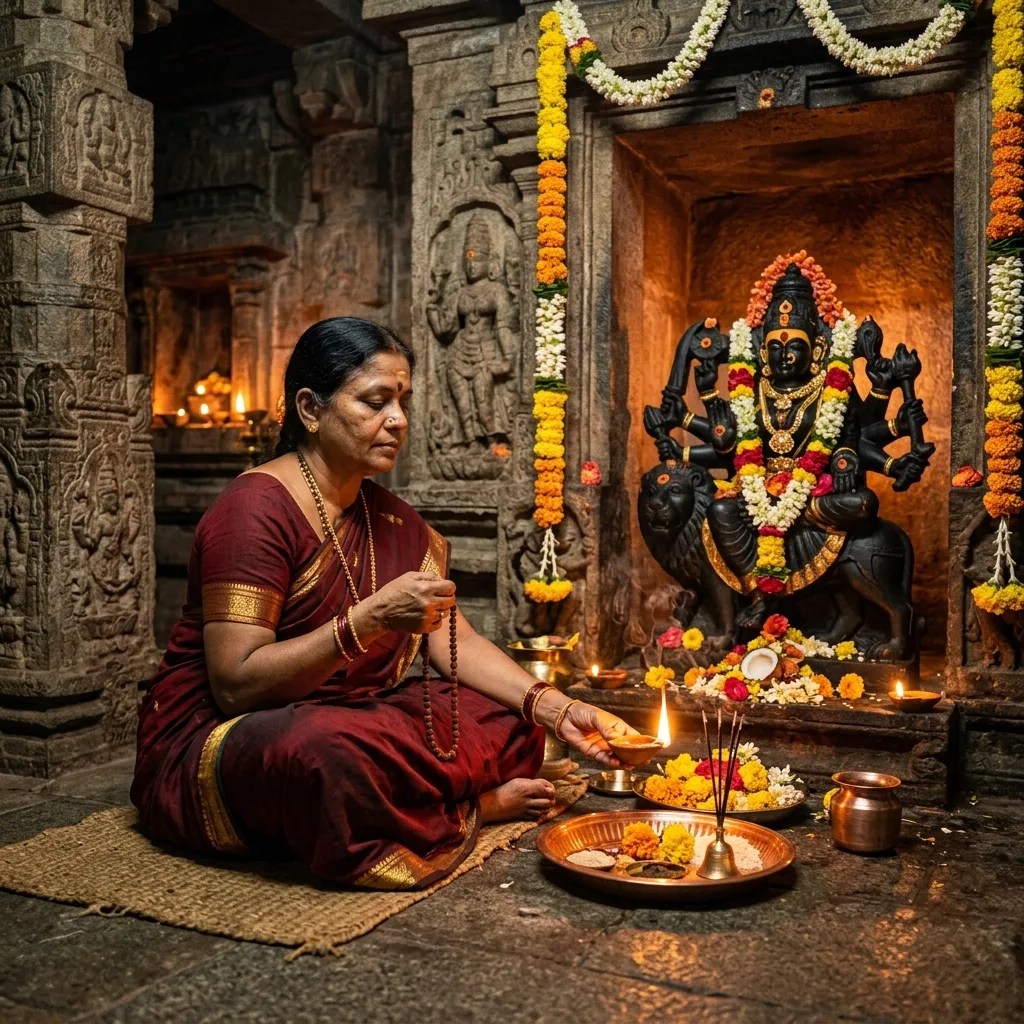
Begin with a calm seat, a clean space, and one clear intention. Recite the mantra slowly enough that each syllable is clear. If you are new to mantra practice, start with 11, 27, or 108 repetitions. Pick one count and keep it consistent for at least a few days before increasing it.
If you are using a mala, one full round of 108 beads is a common traditional count. If you are chanting without a mala, a simple fixed count still works well. Consistency is more important than speed.
When to chant
Morning and evening are both suitable. Many devotees prefer the early morning because the mind is quieter, while others chant after evening lamps are lit because that time feels calmer at home. During Navratri, the mantra is often repeated more regularly, especially by families who keep a short daily Durga prayer.
You can also chant it before starting a task, during a commute if you can stay focused, or in a short pause when the mind feels scattered. The goal is not to force a ritual everywhere, but to make the mantra available as a steady devotional support.
Home and Navratri use
At home, the mantra works well as part of a simple routine: light a lamp, offer water or flowers if that is your practice, chant the mantra, and close with a quiet prayer. During Navratri, many people use it alongside Durga Aarti or a Chalisa so the day has both devotion and structure.
For family use, one person can read the mantra aloud while others repeat it softly. This is especially helpful for children and beginners, because the rhythm is easier to remember when the whole household is practicing together.
Benefits, stated responsibly
People chant the Durga mantra for courage, devotion, emotional steadiness, and a stronger sense of inner discipline. Those are spiritual and personal benefits, not guaranteed outcomes. The practice may help you feel more centered, but it is not a substitute for medical, legal, or financial support when those are needed.
The most realistic benefit is consistency: a short daily mantra can create a stable pause in the day, which often makes prayer, reflection, and decision-making easier.
A simple practice pattern
If you want a practical routine, use this sequence:
- Sit quietly for a minute and settle your breathing.
- Recite
Om Dum Durgayei Namahfor your chosen count. - Spend a few seconds thinking about what strength or protection you are asking for.
- Finish with gratitude and, if desired, a short Durga prayer or Aarti.
This pattern is easy to maintain at home and is gentle enough for beginners.
Related devotion
If you are building a Durga-centered routine, this mantra pairs naturally with Durga Aarti, Durga Chalisa, and Navratri devotion. Reading the meaning once and then chanting daily usually works better than collecting many practices without consistency.
Pronunciation and practice tips
Say the mantra slowly enough that you can hear every syllable: Om, Dum, Dur-gay-ei, Namah. Do not rush the middle sounds. If you are unsure about the transliteration, listen to a trusted devotional source and then keep the pronunciation stable in your own practice. A steady rhythm matters more than perfect speed. If your mind wanders, simply return to the next repetition without judging the session.
If you want to keep the practice realistic, set a short daily target and build from there. A 5-minute routine done every day is usually more sustainable than an occasional long session that is hard to repeat.
FAQs
What is Durga mantra used for?
It is commonly used for protection, courage, focus, and a steady devotional mindset.
How many times should I chant it?
Start with 11 or 27 if you want a short routine, or 108 if you are doing a fuller daily practice.
Is Navratri the best time for this mantra?
Navratri is a very traditional time for Durga worship, but the mantra can be chanted on any day.
Can beginners chant this mantra?
Yes. It is short, easy to remember, and suitable for beginners if they keep the pace slow and clear.
Should I chant it with a mala?
A mala is helpful, but not required. A fixed count without a mala is also fine.
Can I chant it at home?
Yes. A clean corner, a lamp, and a quiet few minutes are enough for a simple home practice.
What matters most while chanting?
Clear pronunciation, steady repetition, and sincere intention matter more than a complicated ritual.