2025
October 20, 2025
 Devpur
 Festival linked to Lord Ganesh
Diwali is a major Hindu festival of light observed with prayer, gratitude, family worship, and spiritual renewal.
Reviewed by Devpur Editorial Team on 31 March 2026
2025
October 20, 2025
2026
November 8, 2026
Duration
5 day(s)
Diwali is the festival of light, but the light is not only external. It also points to clarity, gratitude, renewal, and a return to dharma in daily life. Many families use the festival to clean the home, settle the mind, welcome guests, and begin the new cycle with prayer.
The devotional heart of Diwali is simple: light a lamp, remember the divine, and make space for good conduct. That is why the festival stays meaningful even when the celebration is modest.
Diwali is commonly understood as a five-day sequence, though local customs vary. The usual flow is Dhanteras, Chhoti Diwali or Narak Chaturdashi, the main Diwali day, Govardhan Puja, and Bhai Dooj. Each day carries its own mood, from shopping and cleaning to thanksgiving, home worship, and family connection.
This sequence matters because it turns one festival into a gradual practice. The home is prepared, the lamps are lit, the puja is offered, and then the celebration continues through gratitude and relationship.
On the main Diwali day, many households worship Goddess Lakshmi for prosperity and abundance, and Lord Ganesh for wisdom, auspicious beginnings, and removal of obstacles. The pairing is powerful because prosperity without wisdom can become restless, while wisdom without grace can feel incomplete.
Families usually keep the puja calm and orderly. A clean altar, fresh lamps, flowers, sweets, and sincere prayer are more important than a grand display. The point is to invite auspiciousness into the home, not to perform perfection.
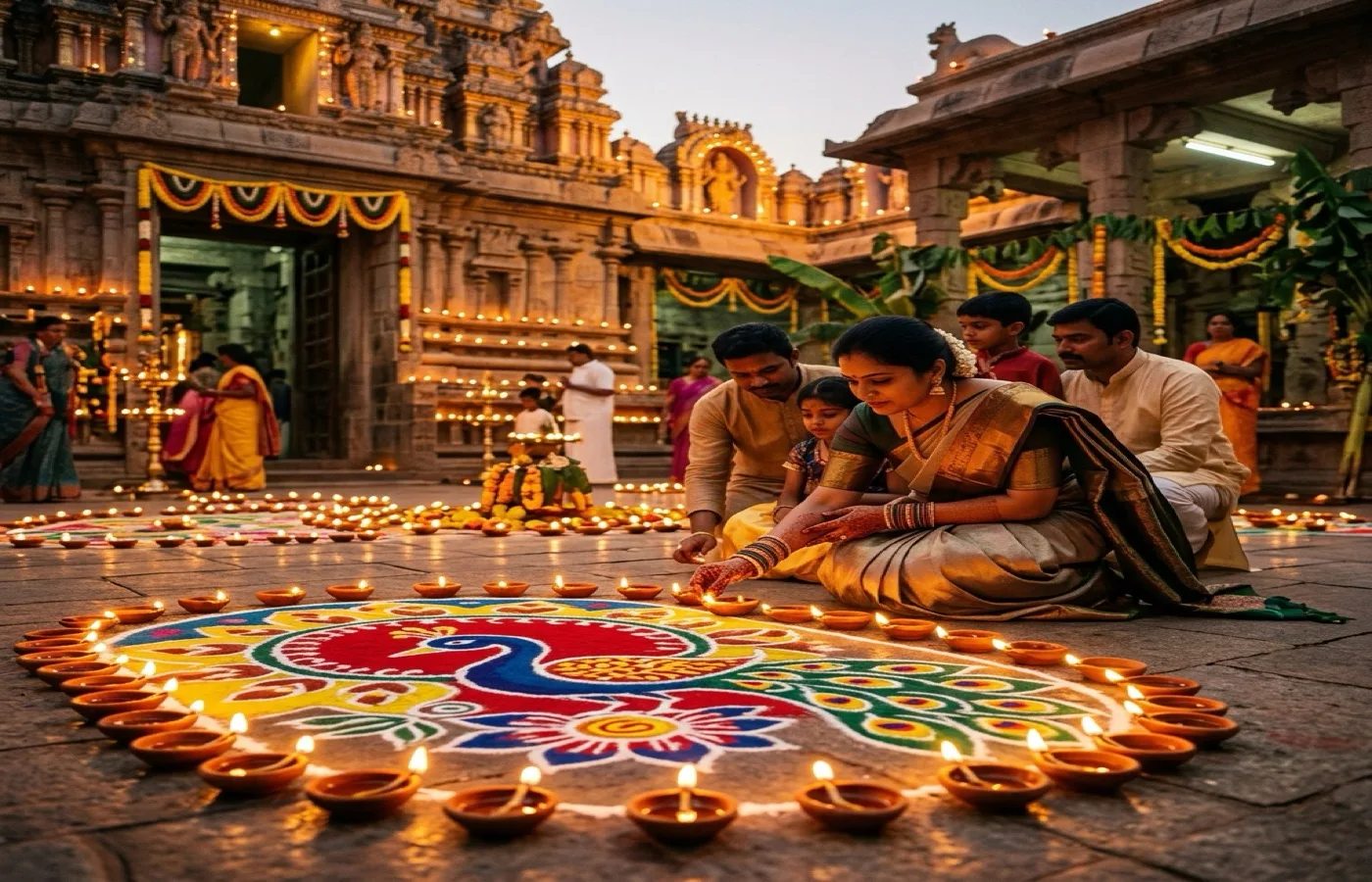
A practical home Diwali flow is easy to follow: clean the space, decorate with lamps or rangoli, gather the family, perform puja, share prasad, and end the evening with gratitude. If you already have a daily mantra or aarti routine, Diwali is the time to repeat it with extra attention rather than invent something complicated.
Children can help with flowers, arranging lamps, or distributing sweets. Older family members can lead the prayer. When everyone has a role, the celebration becomes inclusive and calm.
Diwali is strongest when the home is connected to the wider community. Greeting neighbors, sharing sweets, visiting relatives, or helping someone in need keeps the festival from becoming only a private ritual. Charity and kindness are not side actions; they are part of the festival spirit.
If your household cannot do a large celebration, keep it small and sincere. A few lamps, a neat prayer corner, and honest devotion are fully enough.
Safety matters on Diwali because lamps, decorations, and fireworks can create avoidable risk. Keep diyas stable, store oil carefully, keep children supervised, and avoid excessive smoke indoors. If you use fireworks, choose moderation and respect the people, animals, and neighbors around you.
The safest Diwali is usually the most thoughtful one. Simplicity gives the festival more peace and less pressure.
The value of Diwali lasts beyond one evening. Many families use the festival as a reset point: a cleaner home, a calmer routine, a habit of daily prayer, and a stronger bond with family members. That follow-through is what keeps the festival from becoming only a date on the calendar.
If you want to continue after Diwali, return to Lakshmi Aarti, Ganesh Aarti, or your own family prayer routine. The festival becomes more powerful when it leads into a steadier devotional life.
If you want a simple main-night order, use this sequence: clean the altar, place the lamps, offer flowers or rice, invite the family to sit quietly, recite a short prayer or aarti, and then share prasad. You do not need a long or complicated ritual for the puja to feel complete.
What matters most is attention. A calm voice, a settled posture, and a few minutes without hurry often create a stronger devotional atmosphere than a large but distracted ceremony.
Diwali becomes easier when you remove a few unnecessary pressures. Try not to compare your home with others, avoid overspending just to keep up appearances, and do not let the evening become only about noise or display. The festival is more lasting when it is grounded in gratitude and restraint.
Many families also choose one charitable act during the festival, such as sharing sweets with neighbors, helping someone in need, or keeping one meal simple. These small choices keep the spirit of Diwali active after the lamps go out.
Diwali represents the victory of light over darkness, clarity over confusion, and dharma over neglect. It is a festival of renewal in both home life and inner life.
Lakshmi is associated with prosperity and well-being, while Ganesh is associated with wisdom and obstacle removal. Worshipping them together balances abundance with बुद्धि and steadiness.
The widely followed sequence is Dhanteras, Chhoti Diwali or Narak Chaturdashi, the main Diwali day, Govardhan Puja, and Bhai Dooj.
Yes. A clean home, a few lamps, family prayer, aarti, and shared prasad can make the celebration meaningful without excess.
Keep lamps stable, supervise children, avoid indoor smoke buildup, and use fireworks with moderation or not at all. Safety is part of respect.
Small daily habits do: a prayer corner, short aarti, gratitude, and one act of service or discipline carried into the next week.
Goddess Durga represents protective Shakti, courage, and maternal grace, and this page connects her symbolism with daily worship and Navratri practice.
This page explains the well-known Ganesh Aarti, its symbolism, and a simple home worship sequence for auspicious beginnings.
This page explains Om Jai Lakshmi Mata with complete lyrics, symbolic meaning, and a simple home worship sequence for daily and Diwali devotion.
Ganesh Chaturthi is celebrated with devotion to Lord Ganesh through prayer, aarti, mantra, and community worship.
Diwali symbolizes light over darkness, gratitude over ego, and renewal of spiritual and ethical intention.
Many traditions observe Diwali over multiple days, often around a five-day festive cycle.
Yes, with diya lighting, prayer, aarti, and family devotion, a meaningful home puja can be performed.
Yes, Lakshmi Aarti is a central devotional practice in many Diwali household rituals.
Families can prioritize prayer, gratitude, charity, and respectful celebration to keep the festival spiritually rooted.