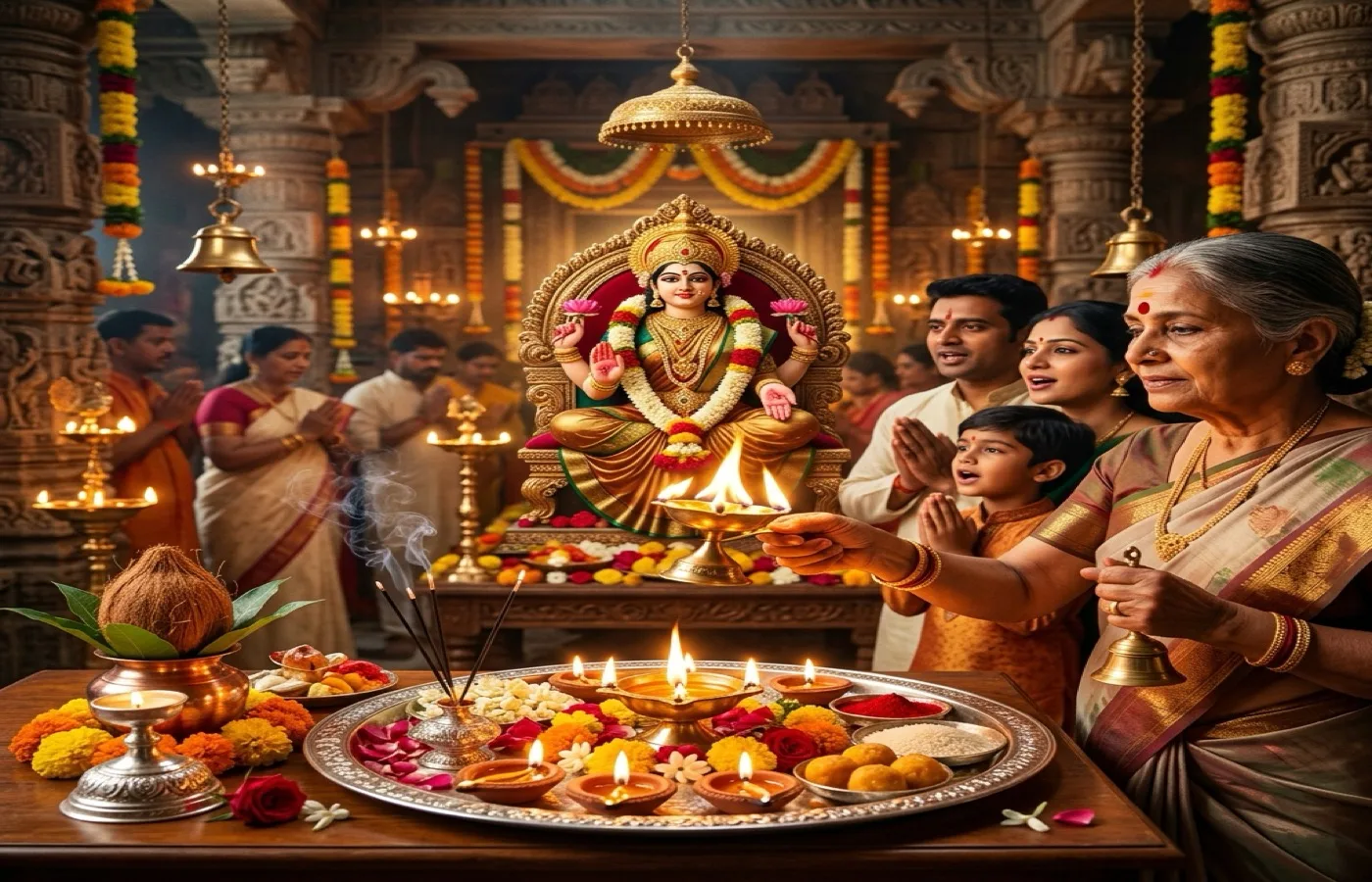
Lakshmi Aarti in household worship
Lakshmi Aarti is most often used to invite calm, purity, and responsible prosperity into home worship. The prayer is not just about wealth in a material sense. It also reflects the wish for order, gratitude, generosity, and a peaceful household atmosphere. That is why many families sing it during evening puja after the lamps are lit and the prayer space has been cleaned.
The most common version begins with Om Jai Lakshmi Mata and praises Lakshmi as the divine mother who blesses the home with harmony and auspiciousness. In practice, the aarti becomes a way to pause, reflect, and make prosperity spiritually meaningful rather than merely financial.
The meaning behind the images
Lakshmi Aarti uses familiar devotional imagery that is worth understanding before repetition becomes automatic.
- Lakshmi Mata represents abundance joined with grace.
- The lamp symbolizes light entering the home, especially when darkness or confusion has been strong.
- The lotus reflects purity, beauty, and calm growth even in difficult surroundings.
- Vishnu connection shows that prosperity is meant to support dharma, not ego.
- Evening worship reminds the devotee to close the day with gratitude rather than worry.
When these images are clear, the aarti becomes more than a festival song. It becomes a short meditation on how to live with balance.
Full lyric context
The opening line, Om Jai Lakshmi Mata, Maiya Jai Lakshmi Mata, is a direct invocation of the Goddess as the source of auspicious blessing. The next line, Tumko Nishdin Sevat, Hari Vishnu Vidhata, places her in relation to daily worship and the divine order upheld by Vishnu.
That relationship matters. Lakshmi worship is traditionally linked with preservation, stability, and the right use of resources. In other words, the prayer asks not only for abundance, but for the wisdom to hold abundance without becoming restless or careless.
Simple home worship sequence
Lakshmi Aarti is easy to include in a home routine:
- Clean the worship space.
- Light a diya or lamp.
- Offer flowers, rice, or simple prasad.
- Recite a short Lakshmi mantra if desired.
- Sing the aarti slowly and clearly.
- Pause afterward for gratitude and a small personal prayer.
This sequence is especially meaningful on Fridays and during Diwali, but it can also be used on ordinary evenings. Consistency often matters more than ceremony.
Why Lakshmi Aarti is important during Diwali
During Diwali, many families use Lakshmi Aarti as the spiritual center of the evening puja. The home is lit, the altar is arranged, and the family gathers with a sense of renewal. The aarti then becomes the moment when all the preparation is given devotional direction.
This is also a good time to remember that prosperity in the Lakshmi tradition is not just about receiving. It is also about cleanliness, generosity, and the ability to use resources wisely. The prayer asks for a household where abundance and ethics stay together.
The chant works beautifully in a lit home because its mood is calm rather than loud. That calmness is part of the teaching. Lakshmi worship asks the devotee to welcome abundance without agitation and to keep the household orderly enough that grace can feel natural.
Common mistakes to avoid
- Do not rush the aarti simply to complete a ritual.
- Do not think of Lakshmi worship as only a request for money.
- Do not neglect the cleanliness and calmness that the prayer depends on.
- Do not treat the words as decoration while the mind is elsewhere.
- Do not separate gratitude from the wish for prosperity.
Even a short, sincere recitation can be meaningful if the attention is steady.
Lakshmi Aarti pairs naturally with Ganesh Aarti, because many households begin with Ganesh and then move to Lakshmi for a more complete auspicious sequence. During festival worship, it also fits well with Diwali, where light, devotion, and family gathering all support the same mood.
If you want a broader devotional context, Goddess Durga is also a useful related path because prosperity and protection often appear together in Shakti-based worship traditions.
For families and beginners
Lakshmi Aarti works especially well for families because everyone can take part without needing advanced ritual knowledge. One person can light the lamp, another can hold the thali, and children can repeat the opening line after hearing it a few times. The key is to keep the tone calm and grateful.
For beginners, start with the opening verse and the meaning of the prayer. Once that feels comfortable, add the rest of the home routine gradually. A sustainable practice is always better than an overcomplicated one.
Many households also pair it with a brief silence afterward, because the quiet moment helps the meaning settle. In that pause, gratitude becomes more than a spoken line; it becomes the mood of the room.
Final takeaway
Lakshmi Aarti is a short prayer with a broad purpose: to invite grace, balance, and auspicious prosperity into daily life. If you treat it as a moment of gratitude rather than only a request for wealth, the prayer becomes much more complete and spiritually grounded.
 Devpur