2025
August 27, 2025
 Devpur
 Festival linked to Lord Ganesh
Ganesh Chaturthi is celebrated with devotion to Lord Ganesh through prayer, aarti, mantra, and community worship.
Reviewed by Devpur Editorial Team on 31 March 2026
2025
August 27, 2025
2026
September 15, 2026
Duration
10 day(s)
Ganesh Chaturthi celebrates the arrival of Lord Ganesh as the remover of obstacles and the giver of wise beginnings. For many families, the festival marks a clean spiritual reset: the home is cleaned, the altar is prepared, and daily habits become more prayerful for the days of the celebration.
The festival is devotional, but it is also practical. It teaches how to welcome a sacred presence with discipline, simplicity, and gratitude rather than display alone.
Ganesh Chaturthi typically begins on the Chaturthi tithi of Bhadrapada and continues according to family or community tradition. Your frontmatter dates give the current reference points for 2025 and 2026, but devotees should still confirm the local panchang before making final plans.
If you are planning home worship, decide early whether you want one day, three days, five days, or the full ten-day observance. That choice affects the size of the murti, the offerings, the daily aarti rhythm, and the final visarjan plan.
Murti sthapana works best when the space is clean, stable, and undisturbed. Place the idol on a neat platform, keep a cloth or simple backdrop behind it, and arrange flowers, lamp, water, and prasadam without crowding the altar.
Before placing the murti, devotees usually clean the area, light the lamp, and begin with a short prayer or sankalp. The goal is not elaborate decoration alone. The goal is to create a calm space where attention stays on Ganesh ji and the daily puja remains manageable.
A simple home puja can follow this rhythm:
The puja should feel steady, not rushed. If children or elders are participating, keep the sequence short and clear so everyone can join without strain.
Many families repeat a short aarti, mantra, or reading each day of the festival. That repetition matters because it turns the festival into a devotional rhythm instead of a one-time event. A brief daily practice is often more sustainable than a long ceremony done only once.
You can also pair the observance with a page from the same devotional cluster, such as Ganesh Aarti, Ganesh Chalisa, or Ganesh Mantra, so the worship flow stays connected and meaningful.
Ganesh Chaturthi is especially strong as a family festival because it gives every generation a role. One person can clean the altar, another can arrange flowers, and children can help with lamps, singing, or quiet reading. That shared participation helps the celebration feel rooted rather than ceremonial.
In community settings, keep the tone welcoming. The festival should bring people together through prayer, food, and shared responsibility, not through pressure or performance.
Visarjan is an important emotional part of the festival, but it should be handled thoughtfully. Whether you do a home immersion, a local water-body immersion, or a symbolic eco-friendly visarjan, the moment should stay respectful and calm.
If your tradition allows, choose an eco-aware murti and follow local guidelines carefully. The purpose of visarjan is to close the festival with devotion and gratitude, not to create harm or disorder. Even a simple symbolic immersion can preserve the meaning when it is done sincerely.
Eco-conscious celebration is increasingly important. Smaller idols, natural materials, minimal decorations, and responsible immersion all help reduce environmental impact. Families can also reduce noise, avoid unnecessary waste, and choose reusable puja items when possible.
This approach does not weaken devotion. It strengthens it by showing that reverence includes care for the world in which the worship happens.
Expect a festival that is warm, busy, and devotional. There may be more visitors, more sound, more offerings, and more family coordination than on ordinary puja days. The best way to enjoy it is to keep the routine simple and to protect the calm center of the observance.
If you are new to the festival, remember that the spiritual value comes from sincerity, not from doing everything perfectly.
It is the celebration of Lord Ganesh’s arrival and a reminder to begin life, work, and prayer with wisdom, humility, and obstacle-removing grace.
Clean the place, place the murti on a stable platform, offer lamp and flowers, recite mantra or aarti, and keep the setup simple and respectful.
No. Traditions vary. Some families observe one day, while others follow a longer festive cycle. The important thing is sincerity and consistency.
Yes. Children can help with flowers, lamp preparation, reading, and quiet singing. Family participation makes the observance more memorable and devotional.
Follow local rules, avoid unnecessary pollution, and choose an eco-aware or symbolic visarjan option when possible. The spirit of farewell matters more than display.
Ganesh Aarti, Ganesh Chalisa, and Ganesh Mantra are the most natural next pages because they extend the same devotion in a simpler, repeatable form.
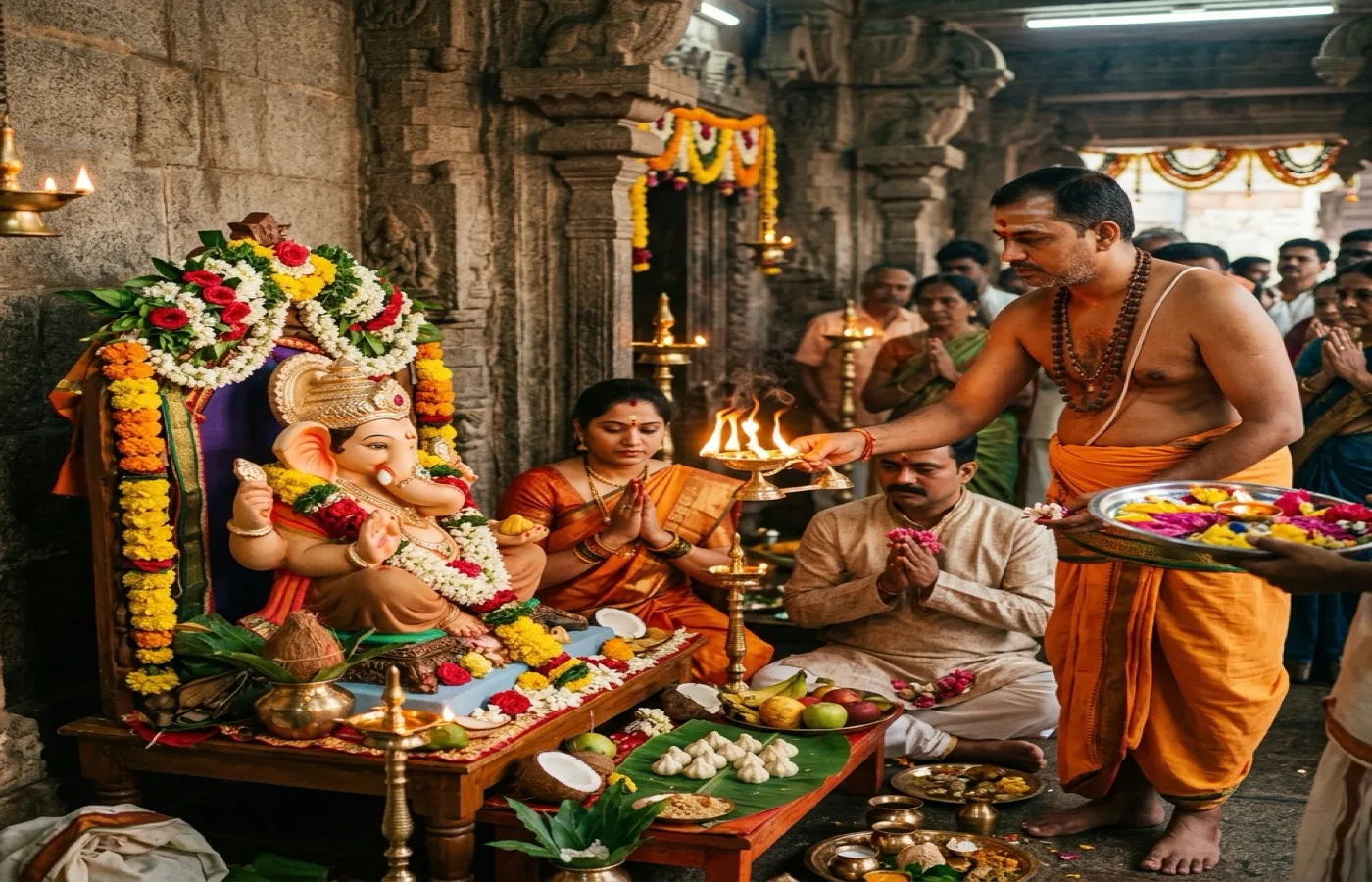
Lord Ganesh is worshipped as remover of obstacles, guide of learning, and the divine beginning of prayer, work, and wisdom.
This page explains the well-known Ganesh Aarti, its symbolism, and a simple home worship sequence for auspicious beginnings.
Ganesh Chalisa is a devotional hymn for clarity, auspicious beginnings, and steady removal of obstacles in daily life.
Ganesh mantra is a simple devotional practice for clarity, calm focus, and auspicious beginnings before study, work, and prayer.
The festival focuses on devotion to Lord Ganesh, seeking wisdom, auspicious beginnings, and obstacle removal.
Celebrations vary by tradition, commonly extending over multiple days up to ten days.
Yes, home puja with mantra, aarti, and clean devotional setup is a common observance.
Ganesh mantra and Ganesh Aarti are among the most popular chants during the festival period.
Devotees can prioritize eco-friendly practices, prayer-focused gatherings, and respectful community conduct.