 Devpur
 What Ganesh mantra is
Ganesh mantra is a short devotional phrase used to begin prayer and daily action with clarity. For many devotees, it is the simplest way to invite Lord Ganesh into a routine without needing a long ritual setup.
The most common form, Om Gam Ganapataye Namah, is popular because it is easy to repeat, easy to remember, and deeply tied to the idea of auspicious beginnings. It is not only a line to recite. It is a way to slow the mind down before acting.
Meaning and devotional purpose
The mantra is a prayer for wisdom, steadiness, and obstacle removal. In devotional practice, that does not mean every problem disappears instantly. It means the mind becomes better prepared to face the problem with more calm and less confusion.
Ganesh is often called before any new task because he represents the first step taken with awareness. That is why this mantra feels practical. It helps a person start with humility, not pressure.
Pronunciation and basic use
The mantra should be pronounced slowly and clearly:
Om - the opening sound of sacred attention
Gam - the bija sound linked with Ganesh
Ganapataye - meaning “to Ganapati” or “to Lord Ganesh”
Namah - a respectful offering or bow
For beginners, one clean line is better than many rushed repetitions. If the pronunciation is still forming, it is better to chant with attention and improve gradually than to repeat quickly without focus.
Chant count and timing
Most devotees use either 21 or 108 repetitions. Twenty-one is practical for a short daily practice, while 108 is common when someone wants a longer, more settled session.
The best time is the time you can keep consistently. Many people prefer early morning because the mind is quieter. Others chant before a new job task, before travel, before a meeting, or before starting study. The mantra also works well in the evening as a closing prayer.
Students and working people
Students often use the Ganesh mantra before reading, writing, or taking exams. The value lies in the mental tone it creates. It encourages the student to sit still, breathe, and begin.
Working people use it before presentations, deadlines, interviews, business calls, or difficult decisions. The prayer is short enough to fit into a busy day, which makes it realistic rather than idealized.
New beginnings and important transitions
Ganesh mantra is especially meaningful before a new beginning: a new class, a new job, a new home, a new project, or a new family responsibility. The prayer does not replace planning or effort. It complements them.
This is why many devotees say the mantra helps with “first steps.” It creates a devotional pause before action, and that pause often makes the next step more thoughtful.
Family use at home
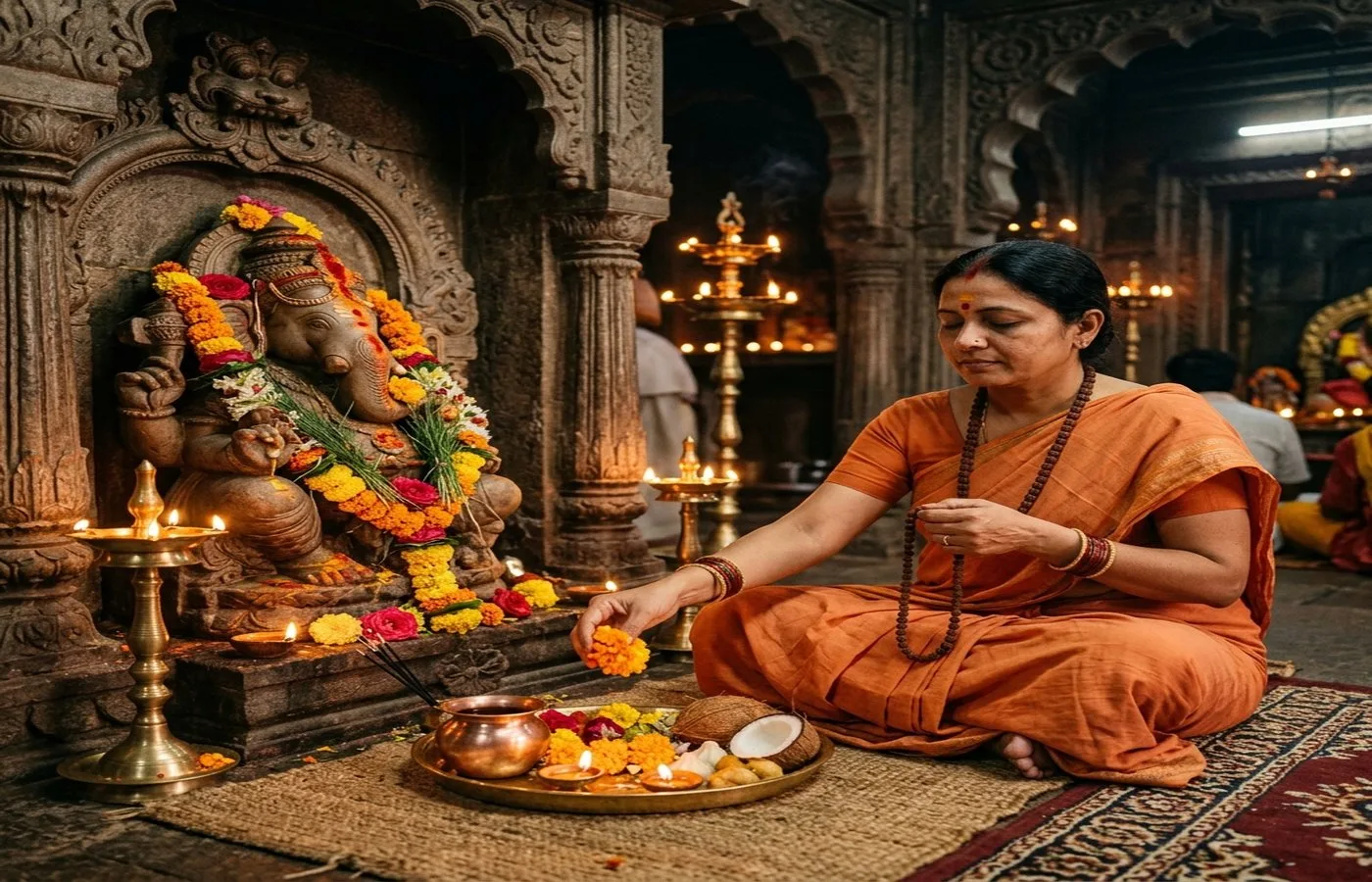
At home, the practice can be very simple. Sit in a clean place, light a lamp if you wish, and chant a fixed count together. Families do not need a complicated setup for the mantra to be meaningful.
Children often connect well with Ganesh because the form is friendly and the chant is short. A parent can say one line, and children can repeat it. Over time, the mantra becomes part of the home rhythm rather than a separate religious event.
Ganesh Chaturthi context
Ganesh Chaturthi is the most familiar festival connected with this mantra. During the festival, the chant naturally fits into welcome, offering, aarti, and farewell. That said, the mantra should not be treated as festival-only language.
Its deeper value appears in ordinary days. A short chant before study or work can be more spiritually useful than a long session done only once a year.
Common mistakes to avoid
- Chanting too fast just to complete the count.
- Treating the mantra like a mechanical lucky phrase.
- Ignoring pronunciation entirely.
- Using the mantra only during festivals and not in daily life.
- Expecting instant results instead of steady inner change.
The strongest practice is simple, patient, and regular.
How to build a stable routine
Choose one time, one count, and one posture that you can repeat. For example, chant 21 times after bathing in the morning, or 108 times on weekends and 21 times on weekdays. Consistency matters more than intensity.
If possible, begin with a short breath pause, chant the mantra with attention, and end with a few quiet moments. This keeps the practice grounded and prevents it from becoming hurried.
Why this page is useful
This page is meant to answer the real user question: how do I use the Ganesh mantra in everyday life? The answer is not only about text. It is about pronunciation, count, timing, and a routine that a student, worker, or family can actually keep.
Final takeaway
Ganesh mantra is a practical devotional tool for beginnings, clarity, and calm action. When it is chanted with steady pronunciation and a realistic count, it supports a way of living that is more focused, respectful, and balanced.