 Devpur
 What a beej mantra is
A beej mantra is a compact mantra form that carries a concentrated devotional purpose. It is not meant to be long or explanatory. Instead, it works through focused repetition, steady sound, and consistent intent. Because of that, beej mantras are usually approached with calm attention rather than casual speed.
For Hanuman bhakti, the beej mantra points the mind toward courage, service, and protection. The sound itself becomes a reminder of Hanuman’s role as Rama’s messenger and fearless devotee.
Hanuman Beej Mantra meaning
Om Aeem Bhreem Hanumate Shri Ram Dootaya Namah is commonly understood as a call to Hanuman as the devoted messenger of Rama. The mantra expresses reverence, asks for inner strength, and keeps the devotee centered on disciplined action rather than fear.
The meaning is important because a beej mantra is not only a sound pattern. Even when the mantra is short, the devotee should know what quality is being invited: courage, clarity, protection, and service-centered devotion.
How to chant it
A simple chanting pattern works best:
- Sit in a clean and quiet place.
- Hold a fixed posture and breathe slowly for a few moments.
- Chant the mantra clearly at a steady pace.
- Keep attention on the sound instead of rushing the count.
- End with one short prayer or one minute of silence.
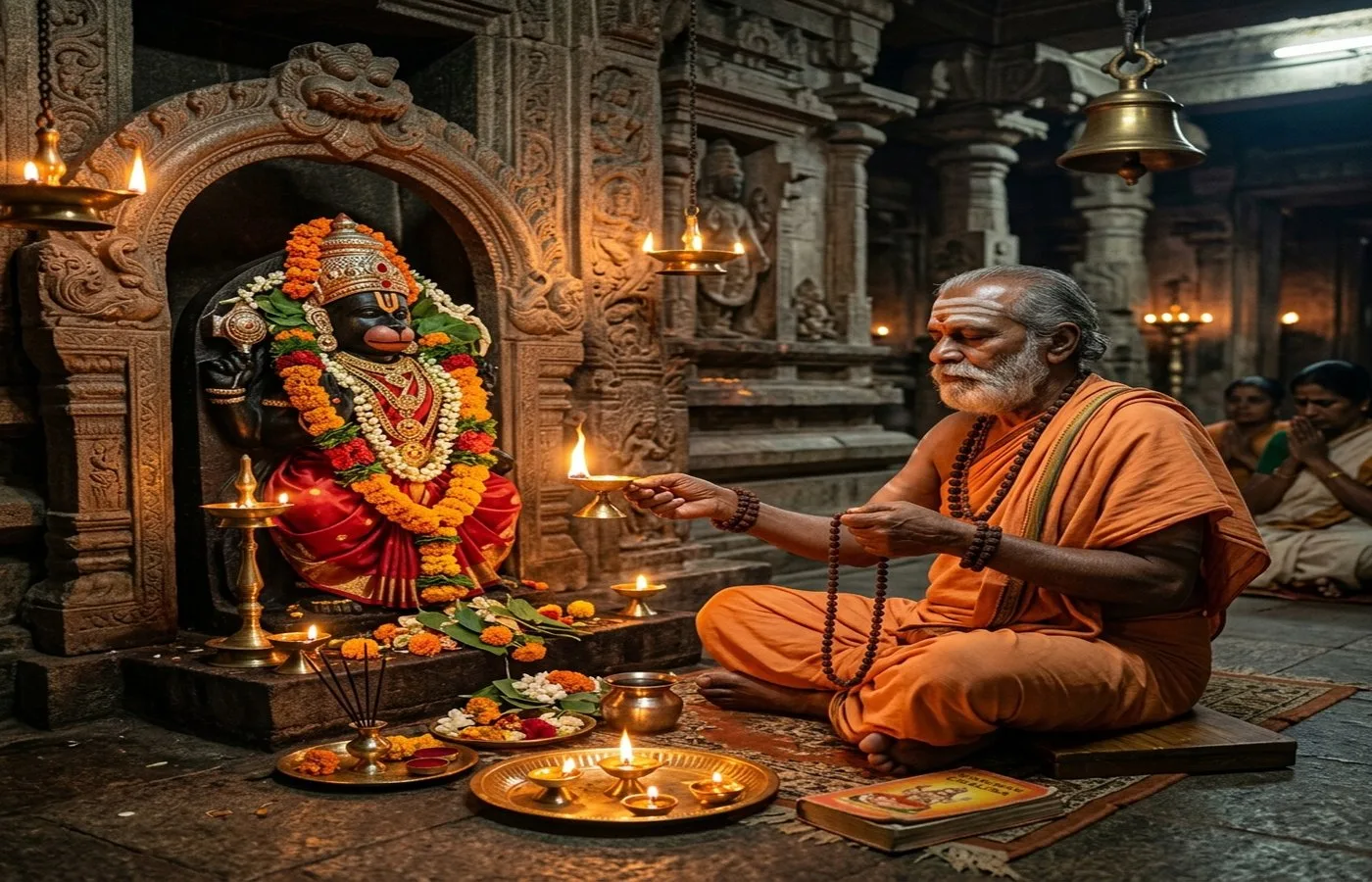
You do not need to make the session complicated. The goal is steady japa, not performance. If the mind wanders, return gently to the sound.
When to chant
Morning is the most common time for Hanuman Beej Mantra because the mind is fresh and the atmosphere is usually quiet. Many devotees also use it before travel, study, work, or any moment when they need courage and focus.
Tuesday and Saturday are often associated with Hanuman worship, but the mantra can be used any day if the intention is sincere and the practice remains respectful.
Chant count and beginner approach
Traditional counts often used are 11, 21, or 108. Beginners should not feel pressured to begin with the largest count. A smaller count done with attention is more valuable than a large count done mechanically.
A practical start looks like this:
- learn the words clearly,
- chant 11 times for a few days,
- increase only when the count feels steady,
- keep the same time and place where possible.
This creates discipline without stress. Consistency matters more than speed.
Caution and respect
Beej mantras are often treated with care because they are compact and concentrated. That means the chant should be approached with respect, not carelessness. If pronunciation is uncertain, learn slowly from a reliable source and avoid turning the practice into a rushed routine.
It is also wise to remember that mantra japa is devotional practice, not a shortcut. The purpose is inner steadiness and Hanuman remembrance. If the mantra is used as a quick fix without devotion, the practice loses depth.
Breath, pace, and posture
The quality of japa depends as much on the body as on the words. Sit in a posture you can maintain without strain. Let the breath settle before you start. If the breathing is hurried, the mind will usually follow. A calm pace helps the mantra stay clear and memorable.
Many devotees prefer a mala so the count stays steady and the mind does not have to keep checking numbers. Others use a simple timer or a small fixed count. Either way, the main point is to keep the practice free from tension.
What not to expect
It is better to approach this mantra with patience than with unrealistic expectations. A beej mantra is not meant to force results on demand. It is meant to shape attention over time. The first signs of progress are usually subtle: less restlessness, steadier focus, and a stronger habit of remembering Hanuman in daily life.
If you chant with respect and consistency, the practice becomes easier to return to. That reliability is often more valuable than dramatic intensity.
Relation to Hanuman bhakti
This mantra fits naturally within Hanuman bhakti because it carries the same themes seen in the Hanuman Chalisa and Hanuman Aarti: service, strength, humility, and fearless devotion to Rama. For many devotees, the mantra becomes a short daily entry point, while the Chalisa offers the fuller devotional text.
Some devotees also use the mantra as a bridge between prayer and action. They chant before starting work, then try to carry the same steadiness into their duties. That is a very practical way to use Hanuman bhakti: not only as a ritual, but as a daily discipline.
Beginner-friendly habit
For a beginner, the best habit is small and repeatable. Pick one time of day, one count, and one place. Keep it simple for a week or two. Once the mind begins to recognize the pattern, the mantra no longer feels like a task. It starts to feel like a familiar devotional anchor.
That makes the mantra especially useful for busy schedules. You can use it as a short morning practice, then expand into the Chalisa on days when you have more time.
Best way to continue
If you are starting from this page, the best next step is to chant a small fixed count daily and then read the full Hanuman Chalisa or Hanuman Aarti. Those pages help place the mantra inside a fuller devotional rhythm.
Final takeaway
Hanuman Beej Mantra is most helpful when it stays simple, respectful, and steady. It is a short mantra, but it carries a clear devotional direction: courage with humility, strength with service, and focus with faith. If you chant it regularly with understanding, it can become a dependable part of Hanuman bhakti.